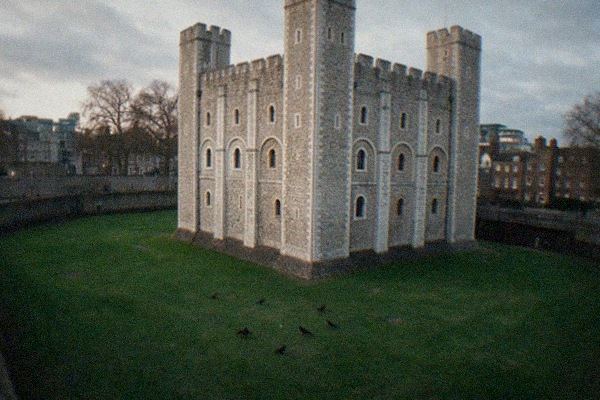
Tower of London
Tower Hamlets, Tower Hill · Crown Jewels exhibition
Historic castle and royal palace with Crown Jewels and Beefeaters.
from $79.93per person, live price on the listing Check availability →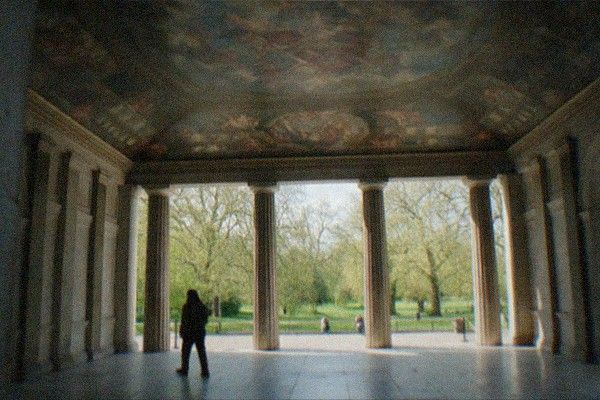
Site of Charles I's execution; Inigo Jones architecture.
Current admission is on the museum's own ticket page.
Official tickets →Opens the museum's own website. Book on the official site; nothing is charged on this page.
Banqueting House is the only surviving fragment of Whitehall Palace, a single grand hall on Whitehall designed by Inigo Jones and ceilinged by Rubens. It suits visitors with an interest in royal history, Stuart drama and architecture, and it can be seen in well under an hour.
Banqueting House is the sole surviving part of the old Palace of Whitehall, the royal residence that burned down in 1698. Designed by Inigo Jones in the 1620s, it is a classical banqueting hall holding the famous ceiling painted by Peter Paul Rubens, and it stands on the spot where King Charles I was executed in 1649.
Most of what once surrounded this building is gone. Whitehall Palace was, for a time, the largest royal palace in Europe, a sprawling complex of apartments, chapels, tennis courts, kitchens and galleries stretching along the Thames. The fire of 1698 destroyed almost all of it. Banqueting House survived, and today it sits oddly alone among the government offices of Whitehall, a single stone room that outlived an entire palace.
The building matters architecturally for reasons beyond survival. When Inigo Jones designed it, English architecture was still largely medieval in character. Jones, who had studied in Italy and absorbed the work of Palladio, produced something London had barely seen before: a cube of a room, proportioned, columned and faced with stone, with a layout borrowed directly from antiquity. It is often described as the first truly classical building completed in England, and architects have treated it as a landmark ever since.
The hall's historical weight comes from a single January morning. Charles I was beheaded on a scaffold erected immediately outside, on 30 January 1649, having walked through the building on his way to his death. The execution of a reigning English king on a public street outside his own banqueting hall remains one of the most extraordinary events in British history, and the site still draws visitors specifically for that reason.
Historic Royal Palaces, the charity that also cares for the Tower of London, Hampton Court Palace and Kensington Palace, manages the building today. It is small by museum standards, but dense with significance. Anyone who enjoys Stuart history, court culture or the history of English architecture will get more out of twenty minutes here than from many far larger institutions.
The visit is essentially one grand room: the main hall, with its ceiling of three huge Rubens canvases, plus a small undercroft below. There is no collection of artefacts, no galleries of objects; the building and its painted ceiling are the exhibit. Expect to look upward, sit on the benches, and let the architecture do the talking.
The ceiling is the centrepiece and the reason many people come. Rubens painted the canvases to glorify the reign of Charles I's father, James I, showing the apotheosis of a king and the benefits of wise rule. The canvases were installed in 1636, commissioned to celebrate the Stuart dynasty, and they hang there still, in a room whose proportions Jones calculated to display them. Stand in the centre of the floor, as the guides suggest, and the perspective works as intended. The hall is often quiet, which helps; visitors tend to linger on the benches with their necks craned.
Beneath the main hall is the undercroft, originally designed as a drinking den for James I and his court, a space where the king could escape the formality upstairs. It now serves as the entrance and shop area. The contrast between the two floors is part of the building's character: a sober classical temple above, a vaulted party room below.
The execution site is marked in the visitor materials, and the guides talk about it at length. There is no physical trace of the scaffold outside, the street having changed immeasurably over three and a half centuries, but the spot is identifiable from the window and the guide materials explain exactly where it stood. For many visitors this is the emotional core of the visit, more so even than the Rubens.
Because the building is a single space, the interpretation is what carries the visit. There are introductory talks from guides at intervals, and there is seating. Anyone hoping for glass cases, audio tours of endless rooms or interactive displays should adjust expectations: this is architecture, painting and history experienced directly, in the original room, not mediated through exhibits.
Standard adult admission costs £10, with no donation price attached to that figure. Timed slots are required, so every visitor must select an entry time when booking. Children aged 5 to 15 go free, under 5s go free, and visitors aged 16 to 17 pay £5. Buy direct from Historic Royal Palaces, as no reseller exists for this site.
Because entry is timed, arriving without a ticket and hoping to walk in is a gamble, particularly in the middle of the day. The slots exist to control the number of people in a single room, and the hall does genuinely feel full when a whole slot group is inside. Booking through the official page, at hrp.org.uk, is the reliable route. You pick a day and a time, and you arrive within the window given.
The standard £10 adult price is Historic Royal Palaces' own figure. A donation option may be offered at a higher price; that is optional, and the amount printed above is the standard, no-donation rate. If you are buying as a family, note the generous child pricing: this is one of the more affordable royal sites in central London for those with children in the 5 to 15 range, who enter free of charge.
Members of Historic Royal Palaces do not need to buy a separate ticket under their membership; check the membership terms on the official site if that applies to you. Concession pricing for students, seniors or other groups is not something we can verify, so check the current price on the museum's own site for any category not shown in the table below.
| Ticket Type | Price | Notes |
|---|---|---|
| Adult (standard) | £10 | Standard price, no donation included |
| Child under 5 | Free | No ticket cost |
| Child 5 to 15 | Free (£0) | Accompanied by an adult |
| Visitor aged 16 to 17 | £5 | Reduced rate |
| Timed slot | Required | Choose an entry time when booking |
| Concessions and donations | On the museum's site | Check official page before booking |
A word on timing your purchase. The building is scheduled to close for conservation around 20 September 2026, after which it will reopen only for scheduled Open Days. If you want the ordinary visiting experience, plan for a date well before that closure, and confirm on the official site that the date you want is still operating. There is no point holding off for a cheap deal: this site has no reseller, and the official price is the price.
Allow around 30 to 45 minutes, longer if you want to sit through a guide talk or study the ceiling in detail. Because entry is by timed slot, the length of your visit is partly set by how long the room holds your interest. Mornings on weekdays tend to be the calmest periods, though exact opening hours vary, so check them on the museum's site.
The honest answer about duration is that this is a short visit by design. It is one hall and one undercroft. Some visitors spend twenty minutes, look up, read the panels and leave satisfied. Others settle onto the benches for an hour, waiting for the light to move across the Rubens canvases. Neither approach is wrong, but if you are building an itinerary, treat Banqueting House as a stop within a day rather than a destination that fills one.
Opening hours are not fixed year-round, and the timed-slot system means the daily schedule is driven by the slot grid. We do not publish specific hours here because they change; the official tickets page is the only reliable source for the day you want. Similarly, closed days are irregular, so always verify before travelling. The one date-related fact that is certain is the conservation closure around 20 September 2026, after which access is limited to scheduled Open Days announced by Historic Royal Palaces.
| At A Glance | Detail |
|---|---|
| Location | Whitehall, central London |
| Nearest station | On the museum's site (Westminster area) |
| Entry system | Timed slot required for all visitors |
| Time to allow | On the museum's site (roughly 30 to 45 minutes typical) |
| What is included | Main hall with Rubens ceiling, undercroft, talks and interpretation |
| Closure | Around 20 September 2026 for conservation, then Open Days only |
| Official tickets | hrp.org.uk, Banqueting House tickets page |
Seasonally, winter visits have their own appeal. The hall is heated and enclosed, and the November light through the windows can be atmospheric. Summer brings more visitors, but the slot system caps the crowding regardless. If you are combining Banqueting House with a longer Historic Royal Palaces day at the Tower of London, do the Tower first, early, and slot Banqueting House into the afternoon when the Tower crush has peaked.
Banqueting House sits on Whitehall in the very centre of Westminster, a few minutes from both Westminster and Embankment stations. Bring your booking for a timed slot, arrive a little early, and be aware that as a historic royal building it has security procedures on entry. Accessibility details, cloakroom rules and bag policies are published on the official site and should be checked there before you travel.
Geographically, the address could hardly be more central. Whitehall runs from Trafalgar Square down to Parliament Square, and Banqueting House stands opposite Horse Guards, roughly in the middle of that stretch. The coordinates are 51.50455, -0.12591, which places it within a ten-minute walk of Trafalgar Square, Parliament Square and Westminster Bridge. Nearly every bus and tube line serving Westminster or Charing Cross deposits you nearby. Walking is honestly the best way to arrive: this part of London rewards it, and Whitehall's government buildings, the Household Cavalry at Horse Guards and the Cenotaph are all on the same street.
On practicalities, two points matter. First, the timed slot: arrive at the start of your window, because the system is designed around controlled entry into a single room. Second, the closure date: from around 20 September 2026 the building enters a conservation period, and access afterwards is limited to scheduled Open Days, so the ordinary visit experience is time-limited in a way that most London museums are not. The official Historic Royal Palaces page, hrp.org.uk, carries the current slot times, prices and any day-specific notices.
For accessibility, the undercroft entrance and the main hall are the two levels, and visitors with mobility questions should consult the access information published by Historic Royal Palaces rather than rely on third-party summaries, ours included. Photography is generally permitted in the main hall, which visitors appreciate given the ceiling, but check signage on the day. As with all the Historic Royal Palaces sites, there is a small shop in the undercroft, and there are no catering facilities on site; this is a building to visit between meals rather than to lunch in.
Pair Banqueting House with anything in the Westminster corridor: the Churchill War Rooms a few minutes away, Horse Guards across the road, the Household Cavalry Museum behind it, and Westminster Abbey or the Houses of Parliament within a short walk. If you want another royal palace with more depth, Hampton Court Palace and Kensington Palace are both managed by the same charity and make natural follow-on visits.
The immediate neighbourhood is unusually rich. Directly opposite stands Horse Guards, where the mounted sentries of the Household Cavalry sit their posts, and behind it lies the Horse Guards Parade ground, site of the Trooping the Colour ceremony. The Churchill War Rooms are a few minutes to the south-west, an easy pairing if you want two very different slices of British history in one afternoon. St James's Park, one of the prettiest of the royal parks, begins a couple of minutes north, and its lake-side walk leads up to Buckingham Palace in about fifteen minutes.
For a fuller royal-palace itinerary, consider spreading across the week. Hampton Court Palace gives you the Tudor world of Henry VIII plus a Baroque wing built for William III, half a day easily, out to the south-west. Kensington Palace covers the Stuart monarchs and the modern royal family in Kensington Gardens. Both belong to the same Historic Royal Palaces family, which is worth knowing if a membership begins to look economical after a couple of visits.
Back on Whitehall itself, the pairing that makes the most historical sense is simply the street. Walking from Trafalgar Square down to Parliament Square passes the Admiralty, the Horse Guards, the Cenotaph and Downing Street, and takes fifteen unhurried minutes. Doing that walk after your timed slot, with the story of Charles I's final walk through Banqueting House fresh in your mind, is one of the better free experiences central London offers. Westminster Abbey sits at the far end of that walk if you want to extend the royal-history thread by several more centuries, or the South Bank and its theatres are just across Westminster Bridge for an evening.
Standard adult admission is £10, with no donation price included in that figure. Children aged 5 to 15 go free, under 5s go free, and visitors aged 16 to 17 pay £5. A donation option may be offered at a higher price, but that is optional. Check the current price on the museum's own site when booking.
Yes. Timed entry is required for all visitors to Banqueting House, and you select an entry time when booking through the official Historic Royal Palaces site. The system controls how many people are in the single hall at once, so arriving within your slot window matters.
Yes. The building is scheduled to close for conservation around 20 September 2026. After that date, it will reopen only for scheduled Open Days announced by Historic Royal Palaces. If you want the ordinary visiting experience, plan your trip well before the closure.
It is the only surviving part of the old Palace of Whitehall, which burned down in 1698. It is known for its Inigo Jones architecture, the Rubens ceiling painting glorifying James I, and its position as the site of Charles I's execution on a scaffold outside in 1649.
Most visitors should allow roughly 30 to 45 minutes, since the visit is essentially one grand hall with the Rubens ceiling plus the undercroft below. Some linger longer for guide talks and to study the ceiling, but it is best treated as a stop within a day rather than a full morning or afternoon.
It stands on Whitehall in central Westminster, opposite Horse Guards, at coordinates 51.50455, -0.12591. It is within a ten-minute walk of Trafalgar Square and Parliament Square, served by buses and tubes through Westminster and Charing Cross. Walking is the easiest approach in this part of London.
Yes, and the pricing is generous. Children aged 5 to 15 enter free (£0), under 5s enter free, and visitors aged 16 to 17 pay £5. Timed slots are still required for all visitors, so include children in your booking through the official site.
Buy direct from the museum's own page at hrp.org.uk, the Historic Royal Palaces site for Banqueting House tickets and prices. There is no reseller for this site, so the official page is the only route, and it carries the current prices, slot times and any closure notices.
Tower Hamlets, Tower Hill · Crown Jewels exhibition
Historic castle and royal palace with Crown Jewels and Beefeaters.
from $79.93per person, live price on the listing Check availability →
Kensington · Childhood home of Queen Victoria; former residence of Princess Diana.
Historic Royal Palaces site with State Apartments, gardens, and royal history exhibitions.
from $88.05per person, live price on the listing Check availability →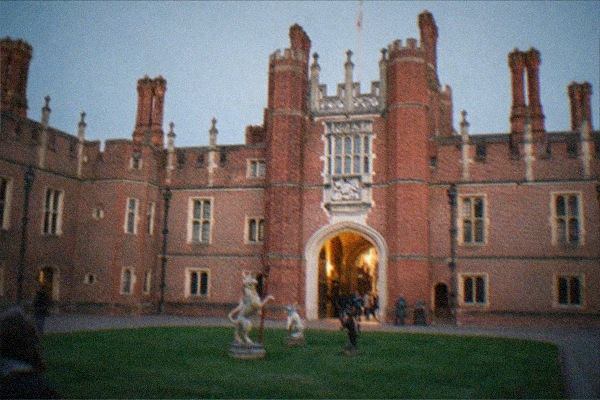
Richmond upon Thames, Hampton Court · Great Hall and maze
Tudor palace with Henry VIII connections and gardens.
from $39.31per person, live price on the listing Check availability →