Is The Sherlock Holmes Museum In London Worth Visiting?
An honest assessment of the Sherlock Holmes Museum on Baker Street: what is inside, what the ticket covers, how long to allow, and how it compares with nearby alternatives.
 By James Whitfield, London Museums And Travel Writer
Is The Sherlock Holmes Museum In London Worth Visiting?
Yes, for fans of the stories and for anyone after a small, theatrical, deeply odd hour in London. The museum holds a 4.7 rating across 813 reviews, and few city attractions inspire that kind of loyalty; it is not a serious archive and never pretends to be. Entry costs GBP 19 for adults, children under 6 go free, and the visit runs comfortably inside ninety minutes, so treat it as a characterful stop rather than a half-day museum.
The museum occupies the world's most famous fictional address on Baker Street, a number that did not exist when Arthur Conan Doyle invented it. In Conan Doyle's day, Baker Street numbering stopped well short of the figure his detective was eventually given, and the building that now wears the famous plate is a Georgian townhouse that spent decades as ordinary commercial premises. Staff there famously answered letters addressed to Sherlock Holmes for years, keeping the fiction alive long before any museum existed. When the premises finally came up for sale, the Sherlock Holmes Museum Society, which had spent decades campaigning for a Holmes museum in London, saw its chance.
That origin explains everything about what the museum is today. It is not a museum about Conan Doyle, and it is barely a museum about Victorian crime. It is a museum about a fictional person, furnished as though that person had just stepped out to chase a suspect through the fog. Fans of the stories will find it charming and oddly moving. Visitors expecting a grand institution on the scale of the British Museum will not, and the honest answer for them is that there are better places to spend the afternoon, several of which cost nothing at all.
Context matters here, and it is worth stating plainly: twenty of the forty-eight museums covered on this site are free to enter, year-round, with no ticket needed. The Sherlock Holmes Museum is emphatically not one of them. It is a small, private, single-subject attraction that charges a premium because its address is a pilgrimage site, and pilgrims pay. The question of whether it is worth visiting therefore splits cleanly into two questions: do you care about Sherlock Holmes, and do you enjoy staged, immersive spaces over conventional galleries? Two yeses and the ticket is easy money. Two noes and you should walk on.
What Is Actually Inside The Museum?
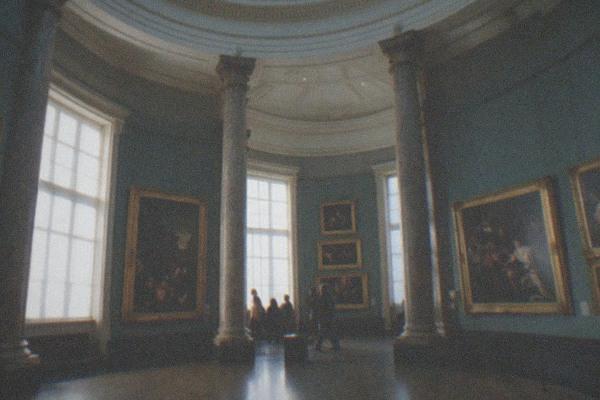
The museum recreates Holmes's fictional rooms across several floors: Mrs Hudson's front room at street level, the famous study with its curved pipe, violin, jackknife-pinned correspondence, chemical apparatus, and slipper of shag tobacco, plus Watson's bedroom upstairs. Waxwork figures include Holmes himself in the study and scenes from the stories on the upper floor, where Professor Moriarty sits at a desk, while wardens in Victorian dress answer questions.
The tour works upward from the ground floor. Mrs Hudson's room on the ground level sets the scene with a waxwork of the landlady and her tea things, and it is the room that most often surprises visitors, because it is smaller than any television adaptation suggests. The first floor holds the study and the adjoining sitting room, which are the rooms most visitors remember and photograph. Holmes's small bedroom sits behind the study, sparsely furnished, with his travelling case by the bed and little else, exactly as the stories imply a restless man would keep it.
Watson's quarters take the second floor, laid out as a doctor's rooms with a medical bag and a writing desk, a nod to the narrator's profession and the many patients he presumably neglected in favour of adventures. The third floor contains the waxwork tableaux: Moriarty plotting at a desk, Sir Henry Baskerville recoiling at a glowing hound, and a scene of Holmes and Watson at work on a case. A small shop near the exit sells deerstalkers, magnifying glasses, and every variety of printed Holmes, from pocket editions to annotated behemoths.
The detail worth knowing before you go is scale. The rooms are genuinely small. A Georgian townhouse was not designed for tour groups, so the museum manages entry in timed batches, and inside you move through the rooms at a gentle shuffle rather than a free wander. Visitors who arrive expecting the long, atmospheric study of the television adaptations sometimes find the real rooms tighter than imagined. That compactness is also the charm: everything in the study is at arm's reach, and the wardens will happily point out the Persian slipper or the unanswered correspondence on the mantelpiece if you ask. Nothing is behind glass, which is rare in London and part of why the place feels lived-in rather than exhibited.

What Does The Ticket Cover And How Much Does It Cost?
An adult ticket costs GBP 19 at the door, with under-16s at GBP 14 and children under 6 free. Timed entry is required, so the ticket is for a specific slot rather than an open day pass, and it covers the whole house from Mrs Hudson's room to the waxwork tableaux. Nothing inside costs extra, and the shop is the only place to spend more money.
The pricing is on the high side for a house that takes about an hour. For comparison, the Charles Dickens Museum in Bloomsbury, a genuine author's house with real manuscripts, charges GBP 14, and the Freud Museum in Hampstead charges GBP 14.9. The Sherlock Holmes Museum charges a premium because it can: the address is a landmark, and the queue outside proves the demand daily. The 4.7 rating across 813 reviews suggests most visitors feel they got their money's worth, and that figure is worth taking seriously, because it is one of the strongest ratings of any paid attraction covered on this site.
Booking matters more here than at most London museums. The timed-entry system means walk-ups can face a wait for the next available slot, and in peak season the afternoon slots can sell out entirely. Booking ahead through the operator's live listing, from $27.09, locks a slot and lets you plan the rest of the day around it. Free-cancellation terms are standard on prepaid tickets, which takes the risk out of booking before your itinerary is fixed. That flexibility is the real argument for prebooking rather than the small price difference.
A note on the practicalities: Baker Street is served by its own Tube station on several lines, and the museum is a short walk from the station exit, which makes it one of the easiest paid attractions in London to reach. Madame Tussauds is around ten minutes away on the same street, which makes the two a natural pairing, though pairing a GBP 19 house tour with a GBP 27 attraction makes for an expensive morning. Plan one or the other first and check the second's timed entry before committing, because both use slot systems and neither rewards an unplanned arrival in July.
How Long Should You Allow For A Visit?
Most visitors spend somewhere between half an hour and an hour inside the house, with the museum itself suggesting allowing about two hours for the full experience including queueing and the shop. The timed-entry system caps how many people are inside at once, so the pace inside is steady rather than rushed. Add travel time and a look at the exterior, and a visit comfortably fits inside a half-day plan for the Marylebone area.
The honest breakdown looks like this:
| Stage of the visit | Typical time |
|---|---|
| Exterior photos and the shop queue at busy times | 10-20 minutes |
| Mrs Hudson's room and the study | 20-25 minutes |
| Watson's rooms and the waxwork tableaux | 15-20 minutes |
| Shop and exit | 5-10 minutes |
That table assumes an ordinary weekday. Weekends and school holidays stretch every stage, because the timed slots run at full capacity and the street outside fills with people photographing the plaque. The plaque itself is a curiosity: it names Sherlock Holmes, Consulting Detective, with the years of his supposed tenancy presented entirely in earnest for a man who never lived. Visitors queue to photograph it in the same spirit that they photograph the door, and the museum has never seen a contradiction in any of this. That deadpan commitment to the fiction is the house's whole personality.
The surrounding neighbourhood rewards the extra time. Regent's Park is a short walk north, and Baker Street's wider stretch has plenty of cafes for a post-visit debrief over a copy of the stories. Visitors pairing the museum with London Museums' other quirky stops often slot it into a Marylebone morning and move on to Bloomsbury or Westminster in the afternoon, which is about right: the museum is a highlight stop, not a destination that anchors a whole day. Anyone tempted to build an entire day around it will run out of things to do by early afternoon.
How Does It Compare With Nearby Alternatives?
Compared with nearby alternatives like the Charles Dickens Museum, the Freud Museum, and the Museum of Brands, the Sherlock Holmes Museum is the most theatrical and least scholarly option, and the only one devoted to someone who never existed. At GBP 19 it costs more than the others (GBP 14 to GBP 14.9), yet it earns the group's highest rating, 4.7 across 813 reviews. Pick it for atmosphere and story; pick the others for real history.
The nearest genuine comparison is the Dickens Museum, fifteen minutes' walk away in Doughty Street. Dickens actually lived there, wrote there, and the house holds his desk and manuscripts. If your interest is Victorian literature rather than the Holmes mythology specifically, Dickens is the stronger visit and the cheaper one. The Sherlock Holmes Museum wins on immediacy: its rooms are staged for drama, and a visit feels like stepping into a story rather than reading about a life. The two museums are, in a sense, opposite answers to the same question of what a writer's house should be.
The Museum of Brands in Notting Hill makes an interesting contrast in approach. It is also a privately run, single-subject house of nostalgia, but it is built on real objects, decades of packaging and advertising that chart how British life actually looked. At GBP 14, from $18.97 booked, it holds a 4.8 rating across 63 reviews. Visitors who enjoy the Sherlock Holmes Museum's immersive quality but want real artefacts often rate the Museum of Brands as the better second stop, and the two make a satisfyingly odd pairing across a single weekend. The deeper comparison is in our piece on whether the Museum of Brands is worth it.
For visitors who want a big-ticket London icon instead, the Tower of London is the other end of the spectrum: GBP 37 at the door, from $79.93 booked, a 4.5 rating across 1789 reviews, and a visit that fills half a day with real crown jewels and real history. Some travellers do both in one day, the Tower in the morning and Baker Street in the late afternoon, and the pairing works because they are such different experiences: one is a thousand years of documented fact, the other is a lovingly maintained lie. Our breakdown of what Tower of London tickets cost covers the options there.

Who Should Skip It?
Skip it if you have never read a story or seen an adaptation: the museum assumes familiarity and offers little to a cold audience. Skip it with very young children, since the waxwork villains and small rooms suit roughly ages eight and up, though under-6s do enter free. And skip it if you measure museums by collection size, because at about an hour it is one of the shortest paid visits in London. Anyone else will likely leave happy.
The strongest reviews come from readers, adaptation fans, and international visitors for whom the address is a cultural landmark on par with any real residence in the city. The weakest feedback tends to come from visitors who expected a conventional museum with artefacts and labels. The house is a stage set, and the reviews reflect whether a visitor wanted a stage set. There is no wrong answer, but there is a mismatch that costs GBP 19 if you get it wrong, and the museum does not offer much of a middle path for the undecided.
Accessibility is worth a line of honest planning. A Georgian townhouse has steep, narrow stairs and no lift, so the upper floors are not step-free. Visitors with limited mobility can see the ground-floor room, but the core of the visit, the study on the first floor, requires a staircase. Anyone for whom stairs are a problem should weigh that before buying a timed ticket, because the warden at the door cannot refund on the spot for a house that was built long before accessibility was a design consideration.
The best time to visit is a weekday morning slot. The first entries of the day meet the emptiest rooms and the most patient wardens, and the study photographs far better with three people in it than with thirteen. Late afternoon is the fallback, and in summer it is the slot most likely to be gone if you have not booked. Rainy days inflate demand sharply, since Baker Street absorbs a lot of weather refugees, and the museum's small capacity means a wet Saturday can sell out its slots by lunchtime.
A few practical points help you judge the fit before you commit the ticket price. The visit runs on timed entry, so you cannot simply wander in off Baker Street and expect to start up the stairs immediately; the slot you choose is the slot you keep. The short length cuts both ways: it makes the museum easy to slot into a day around Regent's Park or Madame Tussauds, but it also means there is no point arriving with the slow, half-day pace of a large gallery. If you are pairing it with other stops, treat it as the warm-up rather than the main event.
Families should also weigh the free-under-6 rule against the age guidance. A child young enough to enter free is also young enough that the waxwork villains and the narrow, dim rooms may be more unsettling than fun, so the free entry does not automatically make it a good family stop. For children around eight and up who know the stories even loosely, the small scale works in the museum's favour, because there is less to get through before attention runs out.
Finally, if the answer to "should I skip it" is yes, the alternatives nearby are strong. Twenty of the forty-eight museums covered on this site cost nothing to enter, and several of them sit within a short Tube ride of Baker Street, so a skip here does not leave a hole in the day. The deliberate-choice point matters most in summer, when good weather pulls everyone outdoors and the paid, capacity-limited stops are the ones that sell out first.

Common Questions About The Sherlock Holmes Museum
Is the Sherlock Holmes Museum in London worth visiting?
Yes, if you know the stories or the adaptations. The museum holds a 4.7 rating across 813 reviews, which is among the highest of any paid attraction covered on this site. It costs GBP 19 for adults and takes about an hour, so it is best treated as a characterful highlight stop rather than a full museum day.
Was Sherlock Holmes a real person?
No. He is a fictional detective created by Arthur Conan Doyle. The museum embraces this completely: it presents the rooms as though Holmes were real, with a plaque presented in earnest and wardens who answer questions in character. The house on Baker Street is a genuine Georgian townhouse, but its famous tenant never existed.
How much are tickets to the Sherlock Holmes Museum?
Adults pay GBP 19 at the door, under-16s pay GBP 14, and children under 6 enter free. Timed entry is required. Booked tickets through the operator's live listing start from $27.09, which is a platform from-price rather than a conversion of the door price.
How long does a visit take?
Most visitors spend between half an hour and an hour inside, with the museum itself suggesting up to two hours for the full experience including the shop and any queue for a timed slot. The house is small, and the timed-entry system keeps the rooms from becoming crowded beyond a steady shuffle.
Can you visit the Sherlock Holmes Museum without booking?
Walk-up tickets exist, but timed entry means you may wait for the next available slot, and afternoon slots in peak season can sell out. Booking ahead is the safer plan. Prepaid tickets typically carry free-cancellation terms, so there is little downside to reserving once your day is roughly planned.
Is the Sherlock Holmes Museum good for children?
Roughly ages eight and up get the most from it. Under-6s enter free, but the waxwork villains, the small dark rooms, and the need to keep moving in a confined space make it less suited to very young children. Older children who know the character usually enjoy the theatrical staging.