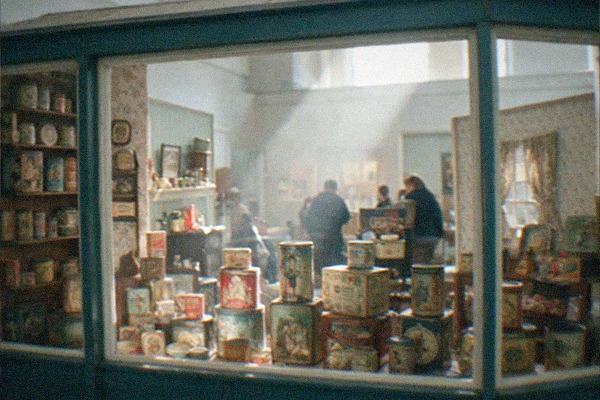
Museum of Brands
Notting Hill, Colville Mews · Time Tunnel of branded products
History of consumer culture through packaging and advertising.
from $18.97per person, live price on the listing Check availability →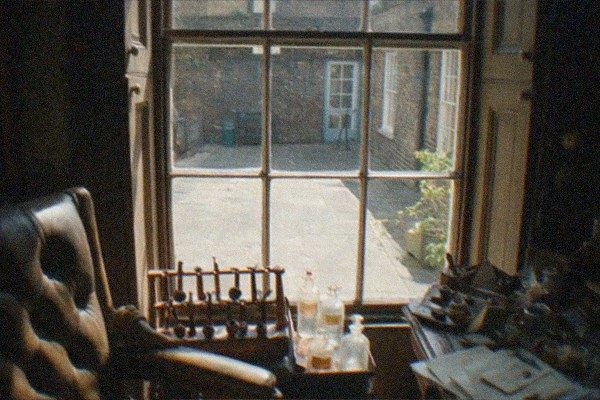
Victorian detective's study and artefacts.
from $27.09 per person, live price on the listing
Check Price & Availability →Opens the official listing with live dates and prices. Book there; nothing is charged on this site.
The Sherlock Holmes Museum is a re-creation of 221B Baker Street, the fictional home of the Victorian detective, filled with period rooms and Holmes memorabilia. It suits fans of the stories, literary history buffs and families after a small, characterful stop rather than a heavyweight collection.
The museum occupies the Georgian town house that the stories give as Sherlock Holmes's address, and refits its rooms as his Victorian-era home. Visitors walk through the detective's study, his bedroom and Mrs Hudson's quarters, all dressed with period furniture, props and memorabilia tied to the famous fictional resident of Baker Street.
Let's be clear about what this is, because it trips some people up. Sherlock Holmes never lived anywhere: he is a character invented by Arthur Conan Doyle in 1887 and developed across four novels and fifty-six short stories. The museum's whole conceit is to treat the fiction as fact. The house stands at 237 to 241 Baker Street, and the museum has the special postal address 221B, the number Conan Doyle gave his hero. So this is not a museum about Conan Doyle the man, nor a scholarly archive. It is an immersive recreation, closer to a stage set you can walk through than a gallery of glass cases.
The centrepiece, and the thing the museum is genuinely known for, is the detective's study on the first floor. The room is dressed exactly as the stories describe it: the fireplace with the correspondence pinned to the mantelpiece by a jackknife, the two chairs by the fire, the chemistry table, the violin, the Persian slipper stuffed with tobacco, the padded chair with the hole burnt through it, and Holmes's correspondence laid out where Watson would have read it. The detail is drawn straight from the texts, and fans of the stories will enjoy spotting each item more than casual visitors will.
Around that study, the house opens out into other rooms. There is Holmes's small bedroom above the study, containing a model of the detective himself and furnishings from the period, and rooms dressed for Mrs Hudson, the landlady whose rooms Conan Doyle placed on this floor. Further up the narrow staircases you find Dr Watson's attic bedroom and an exhibition space upstairs holding wax figures and memorabilia, including items connected to the screen adaptations and a shop-style display of Holmesiana. The whole thing is small, slightly shabby in a way that suits the fiction, and quick to absorb.
Who it suits best: readers who know the stories and want to stand inside them, and visitors who enjoy odd, small, atmosphere-first attractions. Who it may disappoint: anyone expecting a large museum with heavy interpretation, labels on every object or a collection of genuine Victorian artefacts of museum grade. Much of what you see is reproduction or stage dressing, and that is the point. Treat it as a pilgrimage site for a literary character and it delivers exactly what it promises.
Standard adult admission is £19, with timed entry slots required for every visitor, so you book a specific arrival window rather than just a day. Children under 6 go free and under 16s pay £14. Because slots are limited and the house is small, booking ahead is the practical move, and same-day walk-up availability is not something to rely on.
Timed entry is the single most important thing to understand before you go. The museum is a narrow Georgian town house with steep stairs and small rooms, so visitor numbers are capped in each slot to keep the rooms passable. You choose a time when you book and arrive for that window. Turn up late and you may be asked to wait for a gap, and at busy times that wait can be long. Treat your slot as a firm appointment.
On price, the £19 adult figure is the museum's own standard admission price, not a Gift Aid figure or a donation-inflated one. Third-party sellers also list the museum, and one major platform shows tickets from $27.09 USD per person, rated 4.7 across 813 reviews. That dollar figure is a conversion-dependent platform price, so it will not match the GBP door price exactly; check the current price on the museum's own site before you commit to any route. A small booking fee may also apply depending on how you buy, so read the checkout page carefully.
| Ticket Type | Price | Notes |
|---|---|---|
| Standard adult | £19 | Museum's own standard admission price, timed entry required |
| Child under 16 | £14 | Applies from age 6 up to 16 |
| Child under 6 | Free | Still requires a timed entry slot |
| Platform listing | from $27.09 USD | Platform price, rated 4.7 from 813 reviews; differs from GBP door price |
| Concessions / family tickets | on the museum's site | Check current prices and availability direct |
What the ticket covers is simple: the full house, from the ground-floor shop area up through the study, bedroom and attic rooms. There is no separate premium tier or behind-the-scenes add-on at the time of writing. If you are building a London itinerary around several smaller attractions, it can be efficient to bundle bookings, and pairing this with something like the Museum of Brands, also a compact pay-on-entry museum, makes a sensible half-day pairing in the same general area of north-central London.
Allow around 45 minutes to an hour inside the museum itself, with 90 minutes a safer budget once queuing and the gift shop are included. Timed entry spreads arrivals, but the house is small, so weekday mornings remain the quietest window and summer afternoons the busiest.
The visit runs bottom to top. You start at the ground floor, climb to the first-floor study where most visitors linger longest, then work up through the bedroom and Mrs Hudson's rooms to the attic spaces with wax figures and memorabilia. There is no prescribed route after the study, and people do backtrack for photographs. The stairs are steep, narrow and original in character, which slows circulation and explains why the museum caps each slot.
Traffic patterns are predictable for a Baker Street attraction. Weekends, UK school holidays and the summer months bring the longest queues for photographs outside the front door, which has become a ritual in itself, and the tightest slots inside. Mid-week mornings out of season are the calm version of the same visit. Christmas has an added draw, as the period rooms suit the season, but availability tightens early. If your dates are fixed, book your slot as soon as you know them rather than gambling on same-week availability.
| At A Glance | Detail |
|---|---|
| Opening hours | on the museum's site |
| Closed days | on the museum's site |
| Time needed | About 45 to 60 minutes inside; 90 minutes with queue and shop |
| Entry system | Timed entry slots, required for all visitors |
| Nearest station | Baker Street (Underground and National Rail) |
| Address area | Baker Street, Marylebone, London |
Photography is generally welcomed, and for many visitors the study is the shot they came for. If that is you, go early in your slot: the first fifteen minutes inside are the least crowded, and the study chairs get occupied quickly by people doing exactly what you plan to do. There is no cafe inside, so plan coffee elsewhere on Baker Street, where options are plentiful in every direction from the station.
The museum sits on Baker Street in Marylebone, at the corner with the garden square made famous by the stories, with Baker Street Underground station a short walk away. The building is a genuine Georgian town house with steep, narrow stairs, so step-free access is not available to the upper floors and visitors with limited mobility should plan accordingly.
Baker Street station is the obvious arrival point, served by five Underground lines as well as National Rail services, and it is a few minutes' walk to the door. Marylebone station is the nearest mainline terminus, also walkable. If you come by bus, several routes serve Baker Street itself. The exact location is 51.52376, -0.15847, which drops you directly onto the museum's front step; the official site, sherlock-holmes.co.uk, carries the current address details and any access notices.
Be honest with yourself about the stairs before booking. This is a listed-era town house: the staircases are tight, steep and winding, and there is no lift. wheelchair users and anyone who struggles with stairs will find the visit effectively limited to the ground floor, if that. If you are visiting with a pushchair, expect to leave it folded at the entrance, and check current arrangements on the museum's own site before you go, as house rules in small buildings change seasonally. Bag rules are not published centrally: travel light, as the rooms have no storage and the corridors are narrow enough that large backpacks genuinely get in the way.
Queuing happens on the pavement outside, so dress for the weather, and the famous photograph of the front door, with the 221B plaque and the blue heritage plaque, is taken from the street, meaning you can capture it without a ticket if you only want the exterior. The gift shop on the ground floor is compact but well stocked with Holmes-themed merchandise, from deerstalkers to reprint editions of the stories, and it is genuinely one of the more characterful museum shops in this part of London. Serious Conan Doyle researchers should note that the pertinent literary scholarship sits elsewhere, with the Arthur Conan Doyle collection held at Portsmouth, which is worth knowing if your interest extends past this recreation.
The museum sits in Marylebone, one of the most walkable museum districts in London, with Regent's Park, Madame Tussauds and the Wallace Collection all within easy reach. A half-day built around Baker Street works well: the Sherlock Holmes Museum in the morning, then a park or gallery stop within fifteen minutes on foot.
Regent's Park is the obvious next step, ten minutes' walk north, and in fine weather it makes the perfect decompression after the crowded town house: open space, formal gardens and the boating lake. Madame Tussauds is effectively around the corner on Marylebone Road, and the two attractions share a tourist crowd, so expect queues at both in summer. If you would rather avoid the masses, walk south instead into the quiet terraces of Marylebone village, whose high street has a village feel unusual for central London.
For another small, ticketed museum in the same vein, the Museum of Brands in Notting Hill makes an interesting contrast: where the Sherlock Holmes Museum recreates a fictional home, that one recreates the consumer world of the real past through packaging and advertising. Both are compact, both reward an hour rather than a day, and neither demands deep background knowledge to enjoy. Further afield but still simple by Tube, the museum directory on this site lists dozens of comparable smaller museums across the capital.
Two literary stops complete the Holmes trail for completists. A short Tube ride reaches the Sherlock Holmes pub near Charing Cross, which holds its own small recreation of the study upstairs, and Conan Doyle buffs will find plenty of walking routes covering story locations. Within Marylebone itself, the Wallace Collection on Manchester Square, fifteen minutes away, is free to enter and offers genuine Georgian interiors and Old Master paintings, a useful corrective if you want real period rooms rather than stage-set ones after your visit. St Christopher's Place, just off Oxford Street to the south, handles lunch well, with a dense cluster of independent restaurants and coffee shops hidden off the main road.
Standard adult admission is £19, which is the museum's own price and not a Gift Aid figure. Children under 16 pay £14 and under 6s enter free. Third-party platform listings show a different from-price in USD, so check the current price on the museum's own site before buying.
Yes, effectively. Timed entry is required, meaning every visitor books a specific arrival slot rather than an open date. The house is small and slots are capped, so at busy times same-day availability cannot be relied on. Book your slot as early as your travel dates allow.
Allow roughly 45 minutes to an hour inside the house itself, and nearer 90 minutes once you factor in queuing outside and the ground-floor shop. The first-floor study is where most visitors spend the longest, so add time if you want unhurried photographs there.
It is on Baker Street in Marylebone, London, at coordinates 51.52376, -0.15847. Baker Street Underground station, served by several Underground lines as well as National Rail, is a short walk from the door. Marylebone mainline station is also within walking distance.
Only in a very limited way. The building is a genuine Georgian town house with steep, narrow staircases and no lift, so the upper floors, which is where almost everything is displayed, are not step-free. Anyone with limited mobility should check current arrangements on the museum's own site before booking.
No. Sherlock Holmes is a fictional detective created by Arthur Conan Doyle in 1887. The museum treats the fiction as fact, refitting a real Georgian town house on Baker Street, which holds the special address 221B, as his home. It is a recreation, not a biographical museum.
The centrepiece is the Victorian detective's study, dressed as the stories describe it, with the fireplace, jackknife-pinned correspondence, chemistry table and violin. Beyond that are Holmes's bedroom, Mrs Hudson's rooms, Watson's attic room and an upstairs area with wax figures and Holmes memorabilia.
Weekday mornings are the quietest, both for the slot you can get and for crowding inside the small rooms. Weekends, UK school holidays and summer afternoons are the busiest, with the longest queues for the famous exterior photograph and the tightest slot availability.
Notting Hill, Colville Mews · Time Tunnel of branded products
History of consumer culture through packaging and advertising.
from $18.97per person, live price on the listing Check availability →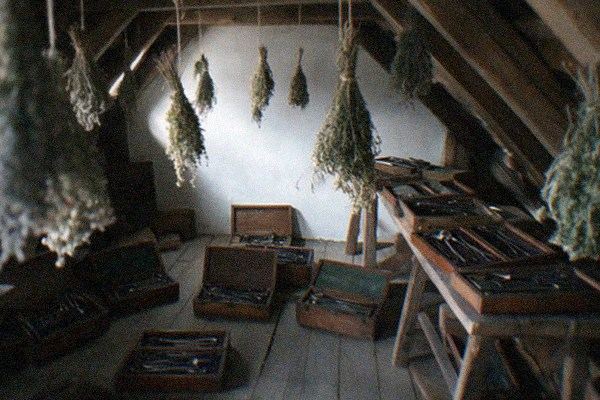
Southwark, St Thomas' Street · Original operating theatre with surgical instruments
Historic 19th-century operating theatre and herb garret.
Official tickets →