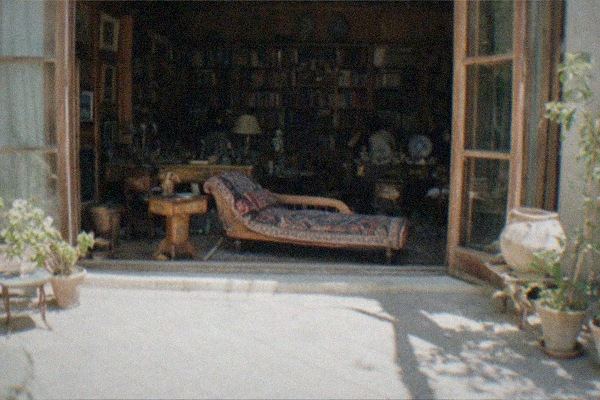
Freud Museum
Hampstead · Iconic psychoanalytic couch and Anna Freud's contributions.
Sigmund Freud's final home with study, couch, and antiquities collection.
from $20.18per person, live price on the listing Check availability →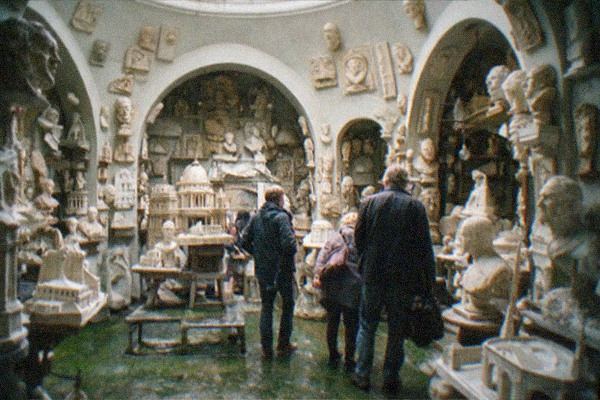
Free entry, no ticket needed.
Sarcophagus of Seti I in the basement
Plan your visit →Opens the museum's own visitor page. There is nothing to book: the permanent collection is free.
An eccentric Georgian architect's house crammed with sculpture, paintings and architectural fragments, left to the nation as it stood. The star object is the Sarcophagus of Seti I in the basement. Free entry suits curious wanderers, architecture fans and anyone who likes small, dense museums over grand ones.
A three-storey Georgian townhouse at Lincoln's Inn Fields, preserved exactly as Sir John Soane left it at his death in 1837. The basement holds the alabaster Sarcophagus of Seti I, an Egyptian royal tomb chest over 3,000 years old, sitting in a vaulted chamber lit from above. Around it, floor to ceiling, are paintings, plaster casts, models and antiquities packed into every corner.
Soane was the architect of the Bank of England and Dulwich Picture Gallery, and he treated his own home as a laboratory for ideas. That is the point of the place. Rooms are manipulated in ways that still surprise: domed ceilings with hidden lights, moveable panels, mirrors that double space, and narrow passages that open suddenly into tall coloured rooms. Nothing here is displayed in the neutral style of a modern gallery. Objects hang above objects, paintings fold out from walls, and the effect is closer to a cabinet of wonders than a curated collection.
The sarcophagus is the headline, and it earns it. Soane acquired it in 1824 and built a sepulchral chamber for it, complete with columns and a ceiling pierced by coloured glass. He famously held evening parties, the so-called Illuminations, where lamps transformed the whole house and the sarcophagus stood at the centre of the drama. Stand at the bottom of the stairs today and the vertical view up through the house is one of the best interior sights in London.
Beyond the Egyptian basement, look for the Picture Room, a small space ingeniously fitted with hinged panels that swing open to reveal layers of paintings, including works by Hogarth, the Rake's Progress series among them. The architectural models, casts from classical buildings, and the Monk's Parlour, a deliberately gloomy cell Soane invented for a fictional resident, all reward slow looking. It is a house that repays reading a little about it beforehand, but even without background knowledge the sheer density of the place carries you.
Visitors who enjoy this kind of single-collector museum often go on to others in the same spirit. See our pages on the Freud Museum and Apsley House for two more houses shaped by one obsessive mind.
Entry to Sir John Soane's Museum is free to everyone, all year round, and no ticket is needed for general admission. Some special exhibitions and events do carry a charge; for those, check the current price on the museum's own site. The official website is https://www.soane.org/.
Soane established the house as a museum by an Act of Parliament and maintained that it should be preserved and kept open, free, for the public and for students of architecture. That founding arrangement still shapes the visitor experience today. You simply arrive and queue if necessary. The house is small and the rooms are intimate, so numbers inside are managed carefully, which can mean a short wait at busy times, but there is no paid queue-jump and no commercial upsell on the doorstep.
For families, the position is straightforward too: children and under-18s are free. Depending on the programme, advance booking may be required or recommended for some activities, so if you are bringing children and want to take part in an event or workshop, look at the listings on the official site first. General entry for children follows the same free route as adults.
What still costs money is the special programme. Temporary exhibitions, talks, evening openings and study days are ticketed separately, and the pricing varies by event. Rather than quote figures here that may be out of date by the time you read this, the honest answer is that each event page on soane.org states its own charge. Some paid events sell out precisely because the spaces are small, so if a particular exhibition is the reason for your trip, book it through the museum directly.
| Item | Price | Notes |
|---|---|---|
| General admission | Free | No ticket needed, year round |
| Children and under-18s | Free | Advance booking may be required or recommended for some activities |
| Special exhibitions | Charge applies | Check the current price on the museum's own site |
| Events and talks | Charge applies | Prices vary by event, listed on soane.org |
Allow roughly one to two hours for a satisfying visit, though the house is small enough that you can see the highlights in well under an hour. Weekday mornings are the calmest time, and weekend afternoons are when queues are most likely. Opening days and hours change periodically, so confirm them on the museum's site before travelling.
The museum's scale works in your favour. Because Soane's house is a sequence of compact rooms rather than vast galleries, it suits a shorter visit better than most London museums. An hour spent moving slowly through the ground floor, the first floor and down to the basement crypt covers everything, and the Picture Room panels alone can absorb fifteen minutes if you let a steward open them for you. Visitors with a serious interest in architecture or Hogarth routinely stay two hours or more, because the density of objects rewards a second circuit.
Timing matters more here than at bigger museums. The corridors and staircases are narrow, and the museum limits numbers inside, so at peak times you may wait on Lincoln's Inn Fields before entering. The square itself, the largest in London, has benches and lawn, so a queue on a fine day is not a hardship. A weekday visit, or arriving soon after opening, gives you the best chance of seeing the sarcophagus chamber and the Picture Room without a crowd around you.
We will not print specific opening days or closing days here, because they have changed in recent years and an out-of-date figure is worse than none. The museum's own site carries the current schedule, including details of any afternoon closures for group or study visits. As a rule of thumb for planning a Holborn day, treat the museum as a morning or early-afternoon stop rather than an evening one, and pair it with a walk through the Inns of Court immediately afterwards.
| At A Glance | Detail |
|---|---|
| Admission | Free, no ticket needed |
| Time to allow | One to two hours |
| Opening hours | On the museum's site |
| Closed days | On the museum's site |
| Nearest area | Holborn, Lincoln's Inn Fields |
| Included with entry | Whole house: basement, ground and upper floors, Picture Room, sarcophagus chamber |
The museum sits on the north side of Lincoln's Inn Fields in Holborn, central London, coordinates 51.51708, -0.1175. Holborn is the nearest Underground station, a short walk away. The house has narrow stairs and small rooms, so expect limited step-free access and check the accessibility pages on the museum's own site before visiting.
Getting there is simple. Holborn station, served by the Central and Piccadilly lines, is the obvious rail arrival point, and several bus routes run along High Holborn and Kingsway, both a few minutes from the square. Walking from Covent Garden or Chancery Lane takes about ten minutes either way. Lincoln's Inn Fields is a pleasant square to approach through, and the western edge of the legal quarter, with its seventeenth-century buildings and quiet lanes, makes the arrival itself part of the visit.
Inside, the constraints are the ones you would expect of a 200-year-old house fitted with fragile objects. The museum asks visitors to keep bags small and offers storage, since the corridors are tight and the hang of paintings and objects leaves little clearance. Photography rules and any temporary room closures are explained on entry; house museums of this kind often restrict flash and tripods to protect light-sensitive works. There is no cafe inside the house, but Holborn's cafes and the square's benches cover a rest stop easily.
Accessibility deserves honest wording rather than reassurance. Soane's house predates lifts, and the visit involves stairs between floors, including down to the basement where the sarcophagus stands. The museum has worked to open what it can, and the current provision, including any step-free routes and facilities, is described accurately on soane.org. Contact the museum directly for specific needs; it is a small organisation that answers helpfully. If full step-free access is a priority for your day, the official site is the right source, and Historic England's listing for the building carries background on the architecture if you want context.
This museum suits curious adults, architecture and history enthusiasts, and anyone who loves dense, characterful collections in a small space. It suits families with older children, since entry is free for under-18s, though very young children may find the crowded rooms and no-touch rules frustrating. It does not suit visitors wanting blockbuster galleries, a cafe culture or a full day out.
The honest test is temperament. If you enjoy the idea of a house where a paintings cabinet swings open to reveal more paintings, or a basement built to stage-manage an Egyptian tomb, this is one of London's best free hours. If your reference point is the British Museum or the V&A, with their scale and facilities, the adjustment is real. Soane's house holds perhaps two thousand objects visible in an hour, not two million, and the pleasure is in the intimacy and the strangeness rather than the breadth.
For students and professionals of architecture the museum has particular weight, since Soane intended it partly as a teaching collection, with casts and models gathered for study. Casual visitors should not be intimidated by that; the drama of the building carries everyone equally, and no prior knowledge is needed to enjoy the sarcophagus chamber. Hogarth's series in the Picture Room give general visitors a famous anchor beyond architecture.
Children respond differently by age. The Egyptian sarcophagus genuinely impresses kids of reading age, and the free entry for under-18s makes a short visit an easy decision, but the house is not a place for running, touching or noisy exploration, and the narrow stairs are not pusher-friendly at busy times. A short targeted visit works better than an open-ended one. Visitors who love this collector-house genre should also consider the Freud Museum in Hampstead, another free-entry-optional house museum shaped around one man's obsessions, or Apsley House at Hyde Park Corner for the grand aristocratic version of the same idea.
Lincoln's Inn Fields sits at the edge of Holborn's legal quarter, within a fifteen-minute walk of the British Museum, Covent Garden and the Inns of Court. The obvious pairing is the British Museum for monumental antiquities after Soane's domestic ones, or simply a walk through Lincoln's Inn and the Temple, both free and atmospheric. Allow a half day for the museum plus surroundings.
The closest pairing costs nothing and needs no planning: the Inns of Court themselves. Lincoln's Inn, Gray's Inn and the Middle and Inner Temple form the legal quarter of London, a district of quiet courtyards, halls and church buildings that most visitors never see. During working weekdays many of the private gardens and lanes are open or partly accessible, and a loop from Lincoln's Inn Fields to the Temple church near the Thames takes under an hour at a stroll. Soane's world was this world; he taught at the Royal Academy nearby, and the setting deepens the museum.
For a second museum, the British Museum is the heavyweight option, fifteen minutes away on foot through Bloomsbury's squares. The contrast is instructive: the British Museum displays Egyptian antiquities at imperial scale, while Soane's house shows you how one Georgian collector lived among them. Visiting Soane first, then walking to the Egyptian galleries, makes for a strong London day at zero cost. The Sir John Soane collection also extends beyond the house: his tomb, a distinctive marble central chamber, stands in St Pancras Old Churchyard, and Dulwich Picture Gallery, his building, can be reached for a longer expedition.
For food and rest, Holborn and Covent Garden bracket the square. Covent Garden, ten minutes' walk, handles crowds and choice; the quieter backstreets around Lamb's Conduit Street north-east of the museum suit a calmer lunch. If your taste runs to more single-collector houses, the same principle that shaped Soane's museum shaped the house's preservation by Act of Parliament, and you can see the same one-mind approach at Apsley House, where the Duke of Wellington's collection sits in his own home. Either way, a morning at Soane's plus a walk through the Temple is a genuinely London combination that costs nothing and feels like a discovery.
Yes. General admission is free to everyone, all year round, and no ticket is needed for the standard visit. Some special exhibitions and events do carry a charge, and you should check the current price for those on the museum's own site before you go.
No. Children and under-18s enter free, on the same basis as adults. For some children's activities and events, advance booking may be required or recommended, so check the listings on the official site if you want to take part in a specific workshop or session.
For general admission, no ticket is needed at all; you simply arrive and enter, queueing briefly at busy times. Advance booking only becomes relevant for special exhibitions, talks and evening events, which are ticketed separately through the museum's own site.
The Sarcophagus of Seti I, an alabaster Egyptian royal tomb chest over 3,000 years old, displayed in a vaulted basement chamber that Soane built for it with columns and light from above. It is the museum's hallmark and stands at the heart of the house.
Plan on one to two hours. The house is small and the highlights, including the sarcophagus chamber and the Picture Room, can be seen in under an hour, but the density of paintings, models and antiquities rewards a slower second circuit for anyone interested in architecture.
The museum is on the north side of Lincoln's Inn Fields in Holborn, at coordinates 51.51708, -0.1175. Holborn Underground station, on the Central and Piccadilly lines, is the nearest arrival point and a short walk from the square.
The house is a 200-year-old Georgian townhouse with narrow stairs between floors, including down to the basement sarcophagus chamber, so step-free access is limited. The museum describes its current accessibility provision on its official site and answers direct enquiries helpfully.
A walk through the Inns of Court around Lincoln's Inn Fields costs nothing and needs no booking, and the British Museum is fifteen minutes away on foot. Covent Garden and Lamb's Conduit Street cover food and rest stops either side of the visit.
Hampstead · Iconic psychoanalytic couch and Anna Freud's contributions.
Sigmund Freud's final home with study, couch, and antiquities collection.
from $20.18per person, live price on the listing Check availability →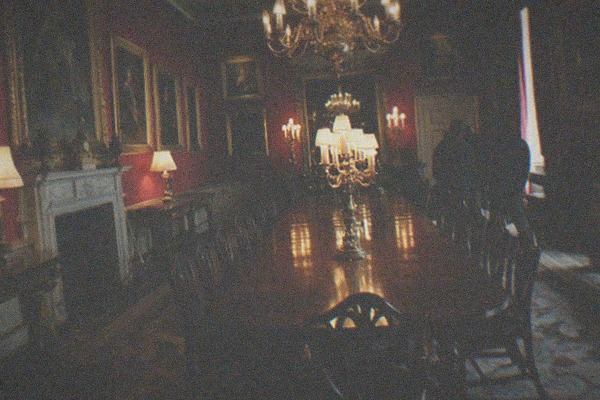
Hyde Park Corner · Wellington Museum; 'Number 1 London' with Waterloo Gallery.
Duke of Wellington's home with art collection including Velázquez and Goya.
from $16.13per person, live price on the listing Check availability →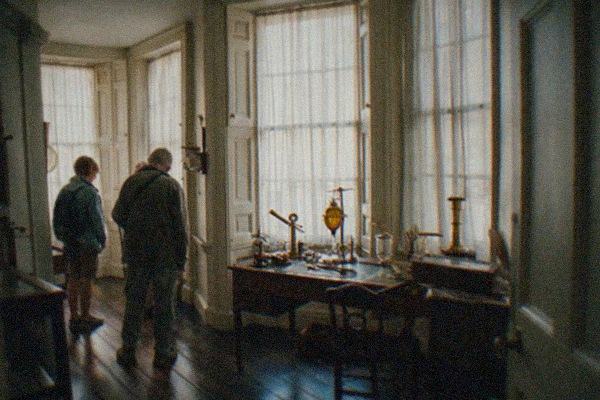
Charing Cross · Site of scientific experiments and diplomacy.
Franklin's only surviving London home with historical experiences.
Official tickets →