Is It Worth It To See The Churchill War Rooms?
An honest, fact-checked answer to whether the Churchill War Rooms are worth the ticket price, what is inside, how long to allow, and how it compares with other London war museums.
 By James Whitfield, London Museums And Travel Writer
Is It Worth It To See The Churchill War Rooms?
Yes, for most visitors the Churchill War Rooms are worth the ticket. It is one of the few London museums where the building is the exhibit: the actual underground bunker from which Churchill and his chiefs of staff ran the Second World War, maps and chairs still in place. At GBP 34 for an adult door ticket it is one of London's pricier single-site museums, but the experience is unique.
The honest answer depends a little on what kind of visitor you are. If you have any interest at all in the Second World War, in Churchill himself, or in the mechanics of how a government functions under bombardment, this site delivers more atmosphere per square metre than almost anywhere in London. The rooms are small, low-ceilinged and dimly lit, and that claustrophobia is the point: roughly 60 staff worked down here in shifts, many of them young women, for years at a stretch during the Blitz.
If your interest in military history is casual, the answer is more qualified. The War Rooms are not a large museum. There are no tanks, no aircraft, no big hardware. What you get instead is a walk-through of preserved office spaces, sleeping quarters, the Map Room and the Cabinet Room, plus the Churchill Museum, a dedicated gallery covering the man's whole life. Visitors who arrive expecting the scale of the Imperial War Museum's main building sometimes leave underwhelmed, and that mismatch of expectations is the most common reason for a disappointed review.
The price question is fair to ask. London spoils visitors with free entry: 20 of the 48 museums covered on this site charge nothing at all, including the Imperial War Museum's own Lambeth branch. So GBP 34 is being spent on something you could, in a loose sense, get a version of for free elsewhere. The difference is that the Imperial War Museum tells you about the war, while the War Rooms let you stand inside the room where it was run. That distinction is worth real money to a lot of people, and the 4.6 rating across 447 reviews on the live listing suggests most of them feel they got it.
Timed entry is required, and the site is popular, so the practical advice is simple: book a slot in advance, ideally for an opening hour, because the narrow corridors fill up and the atmosphere suffers when crowded. A weekday morning visit feels entirely different from a Saturday afternoon one.
For anyone weighing it against the rest of a London itinerary, this page on London Museums exists to make that comparison easy, and the short version is that the War Rooms sit in the top tier of paid London museum experiences alongside the Tower of London, not in the middle tier of "fine if you have time".
What Is Actually Inside The Churchill War Rooms?
The site has two parts: the preserved Cabinet War Rooms, a complex of historic rooms left largely as they were at the war's end, and the Churchill Museum, a modern award-winning gallery telling Churchill's life story. Highlights include the Map Room, the Cabinet Room where ministers met over a hundred times, Churchill's bedroom and private office, and the Transatlantic Telephone Room disguised as a toilet. Together they fill a compact underground footprint under the Treasury building in Westminster.
The Map Room is, for many visitors, the emotional core of the visit. It was locked and abandoned when the war ended, left untouched until it opened to the public, and so the charts, markers, telephones and even the sugar cubes on the tables are the real ones, in the places they were left. Three rooms of it operated around the clock, staffed by officers from the three services who tracked the war's movements on the walls. Standing in it, you are looking at the room exactly as the last shift left it.
The Cabinet Room sits at the heart of the complex. Churchill held over a hundred meetings here during the war years, and the chair at the head of the table is his, marked with a label he had fixed to it himself. Around it are the wooden seats used by ministers and chiefs of staff. It is a plain room, and deliberately so; the point of the complex was that it worked, not that it impressed.
Beyond those two anchor rooms, the route takes in Churchill's Room, where he slept on the nights the bombing above made staying in Downing Street too risky, and the private office occupied by his wife Clementine. There are staff sleeping quarters, a kitchen, and the small Transatlantic Telephone Room, where the scrambler line to Washington was hidden behind a door signed as a toilet so that visitors to the building would not ask questions. The whole complex sits below the Treasury on King Charles Street, entered from Clive Steps near Horse Guards Parade, a few minutes' walk from Westminster.
The Churchill Museum is the modern half of the site. It is a proper biographical gallery, covering the whole arc of Churchill's life from childhood through his wilderness years to the premiership and after, using documents, artefacts, film and interactive displays. Visitors who spend time here come out with a far fuller picture of the man than the bunker alone gives. It is also the part of the visit that works best for younger visitors or anyone whose interest in Churchill is passing rather than deep.
The combination is what makes the ticket defensible: a preserved historic site plus a substantial museum in one entry. Neither half is a filler for the other. Plan to give both real attention, because the visitors who report the best value are almost always the ones who spent an hour in the Churchill Museum rather than walking straight through it to the exit.
What Does The Ticket Cover And How Much Does It Cost?
An adult door ticket costs GBP 34, with children aged 5 to 15 at GBP 17 and under-5s free. The ticket covers the full underground complex, the Churchill Museum, and the audio guide, which is included in the price and is genuinely central to the visit rather than an optional extra. Timed entry is required, so every visitor books a slot. On the booking platforms the tour product starts from $46.06, rated 4.6 across 447 reviews.
It is worth being precise about what is and is not included, because the two prices you will see quoted online are different things. The GBP figure is the museum's own standard adult door price. The USD figure is a booking platform's from-price for a ticketed product, which may bundle extras or simply carry a booking margin. Never treat one as a conversion of the other. UK charity venues, including this one, also display a higher Gift Aid price at the till, which includes a voluntary donation; the standard price is the one quoted here.
| Ticket type | Price at the door | Notes |
|---|---|---|
| Adult | GBP 34 | Standard price, not the Gift Aid figure |
| Child 5-15 | GBP 17 | Under-16s must be accompanied |
| Under 5 | Free | No ticket needed |
| Timed entry | Required for all | Book a slot in advance |
| Audio guide | Included | Covers the whole route |
The audio guide deserves a specific mention. This is not a site with heavy wall text: many rooms are deliberately kept sparse, because the objects speak for themselves, and the narration fills in who sat where, what each telephone was for and which decisions were made in which chair. Skipping it would leave you walking through dimly lit rooms with half the story missing, so build its runtime into your plans rather than treating it as background.
Booking in advance matters more here than at most London museums. Timed entry is required, weekend slots sell out first, and the site caps numbers because the corridors are narrow and the experience depends on a degree of quiet. Booking the museum's own slot directly is the straightforward route; the ticketed products on the live listing suit visitors who want the booking handled in one place alongside the rest of a London itinerary, and a timed-entry ticket for the War Rooms can be checked against the door price before you commit.
One more comparison point on cost: the Imperial War Museum's main branch in Lambeth is free to enter, and it covers the same war with far more hardware. The War Rooms charge because you are paying for the place, not the topic. If the budget is tight and the interest is general, the free museum is a legitimate substitute; if the interest is specifically in how the war was commanded, no free alternative exists.
How Long Should You Allow For A Visit?
Most visitors should allow an hour and a half to two hours for the Churchill War Rooms, with two and a half hours as a comfortable upper bound if you use the audio guide fully and read the Churchill Museum properly. The route is one-way through a compact space, so you cannot shortcut it, but there is no need to rush either. Budget a half-day only if you plan to combine it with nearby Westminster sights.
The audio guide alone runs for a substantial part of that time, and it is paced to the route rather than to a clock. Fast walkers who skim the narration finish in about an hour; visitors who listen to every stop and linger in the Map Room and Cabinet Room routinely report two hours. Families with children tend toward the shorter end, especially with under-10s, for whom the Churchill Museum's interactive elements are the strongest draw.
The space itself is small enough that crowding is the main enemy of a good visit. Corridors are narrow, ceilings are low, and the atmosphere that makes the site special evaporates in a crush. This is the strongest argument for an opening-hour slot: the first hour of the day is the closest thing to having the rooms to yourself, and the difference in experience between an opening slot and a Saturday afternoon one is dramatic.
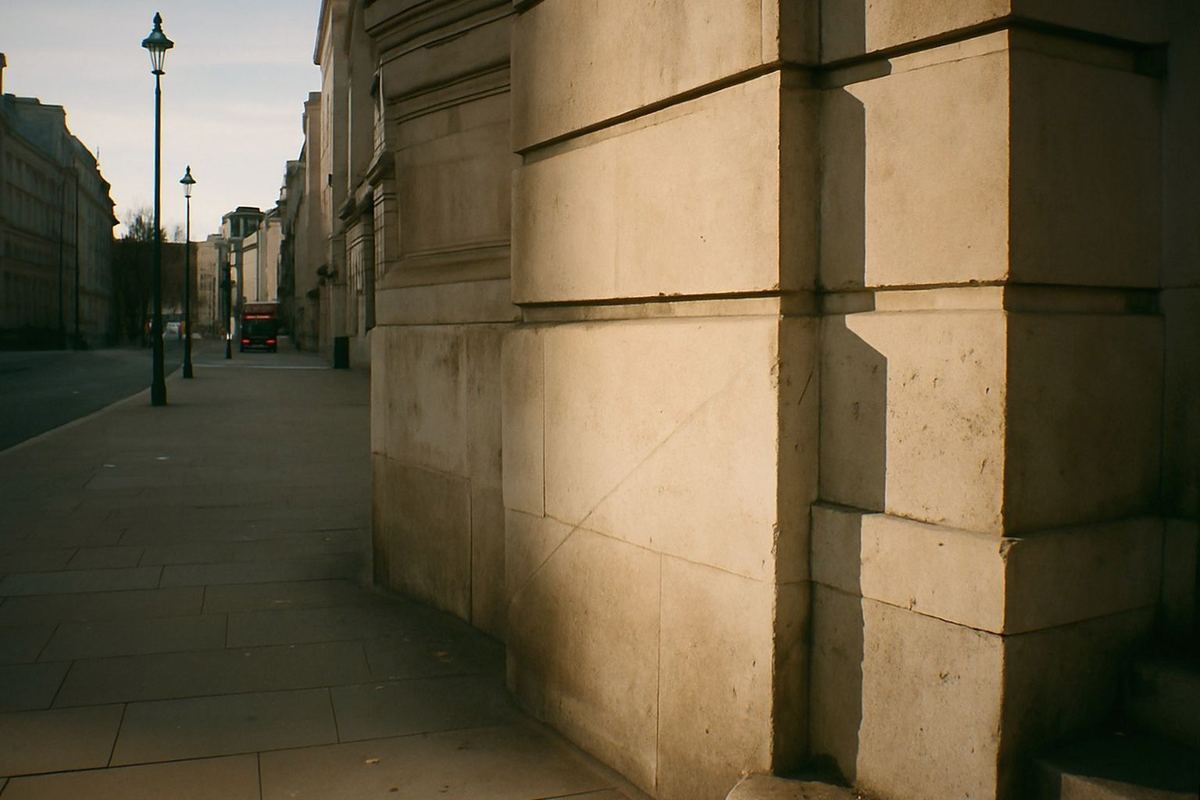
The location makes it easy to fold into a Westminster day. The entrance at Clive Steps sits minutes from Horse Guards Parade, Downing Street and the Houses of Parliament, so a two-hour visit plus lunch plus a walk past the Cenotaph is a natural half-day. Visitors pairing it with a second paid site the same day should read the guide to London's war museums first, because several of the nearest ones are free and change the maths on any multi-ticket plan.
How Does It Compare With The Nearest Alternatives?
Against nearby alternatives, the Churchill War Rooms trade scale and price for unmatched atmosphere and historical specificity. The free Imperial War Museum offers far more hardware and breadth, while the Household Cavalry Museum, a short walk away at GBP 11, provides a small, live working-stables experience. Only the Tower of London, from GBP 37 at the door, comes close on price, trading depth for spectacle and a thousand years of history.
The Imperial War Museum comparison is the one most visitors actually face, and it is not close on paper. IWM London is free, it is bigger, and its Second World War galleries include tanks, aircraft and a V-2 rocket. What it cannot offer is the feeling of standing in the room where the war cabinet sat. If you want to understand the war, go to Lambeth. If you want to feel how it was directed, go underground at Clive Steps.
The Household Cavalry Museum on Whitehall is the nearest paid alternative and a useful budget contrast. At GBP 11 for adults it is a fraction of the cost, and its distinction is that the museum sits inside working stables: you watch the horses being cared for through a glass partition while viewing uniforms and ceremonial kit. It is a small visit, an hour at most, and a good pairing with the War Rooms rather than a substitute for it. The Household Cavalry Museum worth-it question comes up often for exactly this reason: the two sites are five minutes apart and split neatly into a morning and an afternoon.
The Tower of London is the other comparison worth making, because it is the only nearby paid attraction in the same price bracket, at GBP 37 for adults against the War Rooms' GBP 34. The Tower offers the Crown Jewels, the Beefeaters, the ravens and a thousand years of royal and military history in a large outdoor site; the War Rooms offer one decisive decade in a small indoor one. Families with children almost always get more from the Tower; visitors with a specific Second World War interest almost always get more from the War Rooms. If both are on the list, the Tower of London ticket cost breakdown is worth a read before deciding which gets the budget.
| Site | Adult door price | Entry | Best for |
|---|---|---|---|
| Churchill War Rooms | GBP 34 | Timed, book ahead | Wartime command history, atmosphere |
| Imperial War Museum | Free | Advance booking advised | Scale, hardware, the whole war |
| Household Cavalry Museum | GBP 11 | Turn up | Ceremonial cavalry, short visit |
| Tower of London | GBP 37 | Timed, book ahead | Families, Crown Jewels, spectacle |
Who Should Skip It, And Who Should Not?
Visitors with no real interest in the Second World War or in Churchill should probably skip the War Rooms and spend the GBP 34 elsewhere, because the site's whole value rests on that interest. Families with children under about 8 will find the bunker's dim corridors a hard sell against the Tower or the Natural History Museum. Everyone else, and especially visitors who have read anything about the period, should not skip it.
The strongest reviews of the War Rooms tend to come from visitors who arrived with a book's worth of context and found the rooms made it physical. The weakest tend to come from visitors who arrived because the site appears on general "top things to do in London" lists, walked through in under an hour, and left feeling that GBP 34 bought them some old furniture. Neither reaction is wrong; the site simply has a narrower ideal audience than its ranking suggests.
For older children and teenagers studying the period, the answer flips strongly positive. The Churchill Museum's interactive displays are built for exactly that audience, and the site is compact enough that a school-age visitor's attention holds for the full two hours. It is also one of the few London museums where the weather is irrelevant: the whole visit is underground, which makes it one of the better rainy day museum picks in London.
Accessibility is worth a note for planning, because it is a genuine wartime bunker. Some areas involve steps and low doorways, so visitors with mobility needs should check the current access arrangements on the museum's own site before booking a slot, as the historic fabric limits what can be modified.
What Time Of Day And Year Works Best?
The best time to visit the Churchill War Rooms is an opening slot on a weekday, ideally outside UK school holidays, when the narrow corridors stay quiet and the atmosphere holds. Summer and weekends are the busiest periods and slots sell out first then, so book well ahead. Winter visits are quieter overall, and the underground site is unaffected by weather at any time of year.
The opening hour is the single biggest lever on visit quality. The site's ambience, the low light, the hush, the sense of a place frozen in time, depends on a degree of stillness, and the first admission of the day is the closest most visitors will get to it. By mid-afternoon in August the corridors carry a steady stream of tour groups and the experience flattens considerably.
Booking windows matter too. Weekend and holiday slots are the first to go, sometimes weeks ahead in summer, while weekday slots in the quieter months can often be arranged with only a few days' notice. Because timed entry is required for every visitor, there is no walk-up fallback in the busy season: arriving without a slot and hoping for the best is a plan that regularly fails between June and September.
Pairing the timing with the surrounding area is the final piece. An opening slot finishes around mid-morning, which puts you at the start of the Changing of the Guard walk toward St James's Park or Horse Guards Parade with the whole Westminster day ahead of you. An afternoon slot, by contrast, tends to dump you into the most crowded hours of the neighbourhood. If the itinerary allows any flexibility at all, take the morning.
Common Questions About The Churchill War Rooms
Is it worth it to see the Churchill War Rooms?
Yes, for most visitors with any interest in the Second World War or Churchill. It is the actual preserved bunker where the war was directed, with the Map Room left as it was abandoned at the war's end, plus a full Churchill Museum, for an adult door price of GBP 34. Visitors without that specific interest may get more from the free Imperial War Museum.
How much does it cost to get into the Churchill War Rooms?
An adult standard door ticket costs GBP 34, children aged 5 to 15 pay GBP 17, and under-5s enter free. Timed entry is required, so every visitor books a slot. Ticketed products on the booking platforms start from $46.06, but that figure is a platform from-price, not a currency conversion of the door price.
How long does a visit to the Churchill War Rooms take?
Plan on an hour and a half to two hours. The included audio guide paces most of the route, and visitors who listen fully and spend time in the Churchill Museum regularly report two hours or a little more. Fast walkers who skim the narration can finish in about an hour.
Do I need to book Churchill War Rooms tickets in advance?
Yes. Timed entry is required for all visitors, and slots in summer, at weekends and during UK school holidays sell out first. Book a slot ahead of your visit, ideally an opening-hour one, because the narrow corridors are far more atmospheric when quiet.
Is the Churchill War Rooms included with the London Pass?
Pass inclusions change, so check the current pass terms before relying on it. The site is one of London's most popular paid museums, so if it is included on the pass you hold, it is one of the stronger value claims a pass can make. The current inclusions are listed on the pass operator's own site.
Are the Churchill War Rooms good for children?
Older children and teenagers studying the period get a lot from it, and the Churchill Museum's interactive displays are built with that audience in mind. Children under about 8 tend to find the dim, quiet corridors a hard sell, and families usually get more from the Tower of London at a similar price point.