The Best Museums In London: A Ranked Shortlist
London has 48 museums worth writing about, and the honest split is simple: the greatest collections are free, while the great experiences are paid. This ranked shortlist works through both.
 By James Whitfield, London Museums And Travel Writer
Short answer
Of London's 48 major museums, 20 are completely free to enter, including the British Museum, the National Gallery, Tate Modern, the V&A and the Natural History Museum. The best paid experiences are the Tower of London at GBP 37 and the Churchill War Rooms at GBP 34. Start with a free collection, then buy one big experience.
London runs more world-class museums than almost any city on earth, and the numbers behind that claim are worth stating plainly. Of the 48 museums covered on London Museums, 20 charge nothing to enter, year-round, no ticket needed. The British Museum, the National Gallery, Tate Modern, the V&A, the Science Museum and the Natural History Museum are all free. That single fact reshapes every ranking of the city's museums, because a visitor with three days and no budget can still see six of the greatest collections on the planet.
The honest split, then, is this: the greatest collections in London are free, and the great experiences are paid. Nobody needs a ticket to stand in front of the Rosetta Stone or Van Gogh's Sunflowers. But walking the medieval halls of the Tower of London, or descending into the Churchill War Rooms where the wartime cabinet actually met, costs real money and delivers something a gallery case cannot. This shortlist ranks on what a visitor actually gets for their time and money, using real prices and ratings, and ends with a which-one-first verdict by visitor type rather than one universal winner.
What Are The Best Museums In London?
The five best museums in London, ranked on what you actually get, are the British Museum, the Tower of London, the Churchill War Rooms, the National Gallery and the Natural History Museum. Two of those five cost nothing to enter. The ranking weighs collection quality, visitor experience and value together, so a free world treasure can outrank a paid spectacle, but a paid experience that justifies itself can beat both.
The British Museum takes the top spot on pure collection strength. It holds the Rosetta Stone, the Parthenon sculptures and the Egyptian mummies, and entry to the permanent collection costs nothing. Advance booking is recommended but not required, and under-16s go free. It carries a 4.3 rating across 978 reviews on the live listing, a strong score for a museum that receives millions of visitors a year.
The Tower of London is the best paid experience in the city and makes no apologies for its GBP 37 adult ticket. You get the Crown Jewels, the Yeoman Warders, the ravens and nearly a thousand years of royal history in one fortress. It rates 4.5 across 1789 reviews, the largest review base of any paid attraction on this site, and children aged 5 to 15 pay GBP 18.50 while under-5s enter free. Timed entry is required, so the ticket buys you a guaranteed slot rather than just a door.
The Churchill War Rooms is the city's most atmospheric paid museum. The underground complex in Westminster has been preserved as it was left at the end of the war, and the adult ticket is GBP 34, with children aged 5 to 15 at GBP 17. It rates 4.6 across 447 reviews. The National Gallery, free on Trafalgar Square, and the Natural History Museum, free in South Kensington, round out the five.
| Rank | Museum | Adult price | Rating | Nearest Tube |
|---|---|---|---|---|
| 1 | British Museum | Free | 4.3 across 978 reviews | Tottenham Court Road |
| 2 | Tower of London | GBP 37 | 4.5 across 1789 reviews | Tower Hill |
| 3 | Churchill War Rooms | GBP 34 | 4.6 across 447 reviews | Westminster |
| 4 | National Gallery | Free | 3.7 across 196 reviews | Charing Cross |
| 5 | Natural History Museum | Free | 4.1 across 346 reviews | South Kensington |
Which Free Museums Should You Not Miss?
Six free museums should top any first-time list: the British Museum, the National Gallery, Tate Modern, the V&A, the Natural History Museum and the Science Museum. All six are free year-round for their permanent collections, and all six still charge for temporary exhibitions, which is the catch worth knowing before you plan a day around one.
The free tier in London is genuinely world-class, not a consolation prize. The National Gallery on Trafalgar Square holds Van Gogh's Sunflowers, Turner's fighting Temeraire and one of the finest Renaissance collections anywhere, and under-18s are free for everything. Tate Modern on Bankside is the UK's national home of international modern art, with no booking required for the collection. The V&A in South Kensington is the world's leading museum of art and design, spanning centuries of human making, again with no booking needed for general admission.
South Kensington packs three of them into one road, which makes it the single most efficient museum day in the city. The Natural History Museum's dinosaurs and blue whale skeleton sit directly opposite the Science Museum's flight galleries, with the V&A a two-minute walk away. If you are planning that cluster in depth, the dedicated South Kensington museums guide breaks down how to split a day between the three buildings.
One warning that applies to every free museum on this list: the temporary exhibitions still cost money. The Natural History Museum charges for its paid exhibitions and events, the Science Museum charges separately for Wonderlab, Power Up and the IMAX, and Tate Modern's big seasonal shows carry their own tickets. Free entry means the permanent collection, not the poster exhibition on the front of the building.
A free museum can still benefit from a cheap add-on. The British Museum's own guided highlights tours start from $9.31 per person on the live listing, which for many visitors is a fair trade for turning 60 crowded galleries into a coherent two-hour story. If you are weighing whether the collection needs a guide at all, the piece on whether you need British Museum tickets covers what booking actually buys you.
| Free museum | Area | What it is famous for | Still paid |
|---|---|---|---|
| British Museum | Bloomsbury | Rosetta Stone, Parthenon sculptures | Special exhibitions, some events |
| National Gallery | Trafalgar Square | Van Gogh, Turner, Renaissance masters | Some special exhibitions |
| Tate Modern | Bankside | International modern art | Temporary exhibitions |
| V&A | South Kensington | Centuries of art and design | Some exhibitions and events |
| Natural History Museum | South Kensington | Dinosaurs, blue whale skeleton | Paid exhibitions and events |
| Science Museum | South Kensington | Flight, space, Wonderlab | Wonderlab, Power Up, IMAX |
Which Paid Museums Are Worth The Ticket Price?
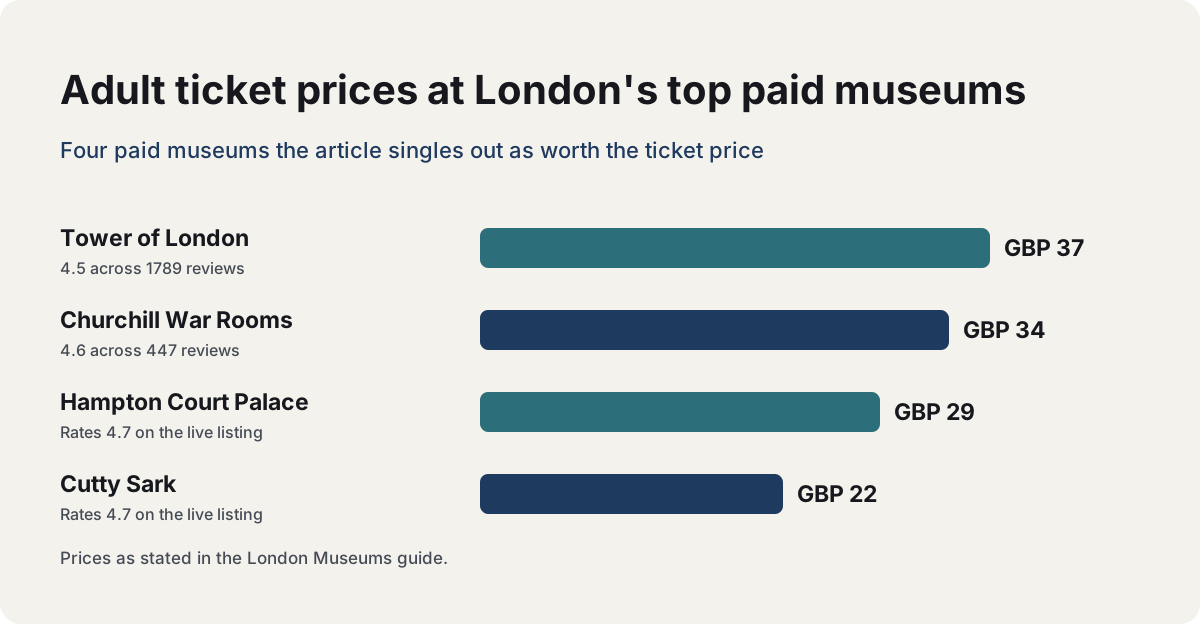
Four paid museums justify their price without hesitation: the Tower of London at GBP 37, the Churchill War Rooms at GBP 34, Hampton Court Palace at GBP 29 and the Cutty Sark at GBP 22. Each one sells an experience you cannot get from a display case, and each one carries a rating of 4.5 or higher on the live listing, which is a better hit rate than the free tier manages.
The Tower of London is the headline purchase. GBP 37 is the largest adult ticket of any museum on this site, and it is also the most reviewed paid attraction at 4.5 across 1789 reviews. What the ticket buys is time inside a working royal fortress: the Crown Jewels in the Jewel House, the Bloody Tower, the medieval palace rooms and a Yeoman Warder tour included in the price. Children aged 5 to 15 pay GBP 18.50 and under-5s are free. Timed entry is required, and the early slots go first at weekends.
The Churchill War Rooms at GBP 34 is the best value among the big paid names for anyone with even a passing interest in the Second World War. The Map Room has been left exactly as it was when the lights were switched off at the end of the war, and the attached museum tells Churchill's story in full. It rates 4.6 across 447 reviews. For a fuller comparison of what the ticket includes, see whether the Churchill War Rooms are worth it.
Hampton Court Palace at GBP 29 gives you Henry VIII's kitchens, the Chapel Royal and the famous hedge maze, and the Cutty Sark at GBP 22 lets you walk the deck of the world's sole surviving tea clipper in Greenwich. Both rate 4.7 on the live listing, tied for the highest rating of any paid museum on this site. The Cutty Sark's GBP 22 adult ticket drops to GBP 11 for children aged 4 to 15, and under-4s are free.
Because the Tower's timed-entry slots are the one booking on this page that can genuinely fill up on a summer weekend, it is worth locking the date once your itinerary is settled and leaving the free museums to be decided on the day.
Which Museums Are Best For Families?
The best museums for families are the Natural History Museum, the Science Museum, the London Transport Museum and the Tower of London. The first two are free, the Science Museum's Wonderlab adds a paid layer that children consistently love, and the London Transport Museum admits under-18s free with a paid adult, making it one of the best child deals in the city.
The Natural History Museum is the default family day out in London, and it earns that status. The dinosaur gallery and the blue whale skeleton in the entrance hall are free, children aged 0 to 3 are free, and 4-to-17s pay reduced rates only for the paid exhibitions. Arrive early: the queue for the dinosaur gallery builds within an hour of opening, and the advice on avoiding Natural History Museum queues is worth reading before you go.
The Science Museum next door is the better pick for hands-on children. General admission is free, but the paid add-ons are where it excels: Wonderlab is a gallery of interactive experiments, Power Up is a video gaming hall, and the IMAX runs science films. Under-3s enter free for the paid attractions. The London Transport Museum in Covent Garden charges adults GBP 27, but every under-18 enters free with a free timed ticket, so a family of four pays for two.
The Tower of London works for families with children over about seven, less so for toddlers: the GBP 18.50 child ticket for ages 5 to 15 is fair for what is essentially a full day out. The Postal Museum is the sleeper hit, with its underground Mail Rail ride and a child ticket of GBP 11 online for ages 2 to 15, under-2s free with an adult.
| Museum | Adult price | Child deal | Family verdict |
|---|---|---|---|
| Natural History Museum | Free | 0-3 free; 4-17 reduced for exhibitions | Best free family day |
| Science Museum | Free | 3-and-under free for paid attractions | Best for hands-on kids |
| London Transport Museum | GBP 27 | Under-18s free (timed ticket) | Best child discount |
| Tower of London | GBP 37 | 5-15 GBP 18.50; under 5 free | Best for ages 7+ |
| Postal Museum | GBP 18.5 | 2-15 GBP 11 online; under 2 free | Best train ride |
How Much Time Do You Need At Each Museum?
Plan on two to three hours for a large free museum, three to four for the Tower of London, and about two for the Churchill War Rooms. The British Museum and the V&A can absorb a full day if you let them, but a focused highlights visit of either fits comfortably in a morning. Nothing on this list rewards a rushed visit.
Time budgeting is where most London itineraries fail. The Tower of London is a half-day commitment: the Crown Jewels alone can take an hour in peak season, and the Yeoman Warder tour runs about an hour more. The Churchill War Rooms is more contained, with most visitors spending around two hours underground, and the route is one-way, so you cannot shortcut it. The British Museum is deceptive: 60 galleries over four kilometres of floor space means a highlights visit needs at least two hours and a map.
The Greenwich cluster rewards a different approach. The National Maritime Museum, the Queen's House and the Painted Hall sit within a five-minute walk of each other, and the Cutty Sark is beside them, so a full Greenwich day can combine a free museum, a free art gallery and one paid experience. The Greenwich museums guide lays out that walk in order.
If you are building a multi-day plan around these time budgets, the 3-day London museum itinerary sequences the free and paid heavyweights so that no day exceeds about six hours of museum time, which is the realistic ceiling before feet give out and attention collapses.
| Museum | Realistic visit time | Timed entry? |
|---|---|---|
| British Museum | 2-3 hours (highlights) | Recommended, not required |
| Tower of London | 3-4 hours | Required |
| Churchill War Rooms | About 2 hours | Required |
| Natural History Museum | 2-3 hours | Free ticket recommended for busy periods |
| Tate Modern | 2 hours for collection | Not required for collection |
| Cutty Sark | About an hour | Required |

Which Museums Are Best On A Monday Or A Rainy Day?
Almost all of London's major museums open on Mondays, unlike Paris and Amsterdam, so Monday is a genuinely good museum day here. For rain, the best one-building options are the British Museum, the National Gallery, the Churchill War Rooms and the London Transport Museum, each of which can fill three hours without stepping outside more than once.
The Monday point deserves emphasis because it surprises people. Many European capitals shut their national museums on Mondays; London mostly does not. The free nationals keep normal opening hours, which makes Monday the smart day to visit the busiest ones, since many travellers wrongly assume closure and go elsewhere. The dedicated museums open on Monday guide lists which ones break the rule.
For rain, the calculation is about depth, not shelter. The Churchill War Rooms is entirely underground, so weather is irrelevant to it, and its 4.6 rating across 447 reviews makes it the best wet-weather paid choice. The British Museum's Great Court alone justifies a rainy afternoon. The London Transport Museum in Covent Garden combines well with the covered Covent Garden Piazza next door.
One genuine closure to plan around: Banqueting House in Whitehall closes around 20 September 2026 for conservation, reopening only for scheduled Open Days, so do not build a day around it. And Kew Palace has no standalone ticket at all: entry requires a Kew Gardens ticket, and the palace itself is closed from January to 29 March. Both are covered in is Kew Palace worth visiting.
Which Museums Are Best If You Only Have One Day?
With one day, do the British Museum in the morning and the Tower of London in the afternoon, then finish at Tate Modern or the National Gallery if energy allows. That combination gives you the city's greatest free collection and its greatest paid experience for a total adult spend of GBP 37, and the two sit on the Central line corridor so travel time stays under half an hour.
The one-day formula works because the two anchors are complementary. The British Museum costs nothing and peaks early: galleries are quietest in the first hour after opening, and the Rosetta Stone is reachable before the tour groups arrive. The Tower of London is better in the afternoon once you have a timed slot, and the Crown Jewels queue shortens after 3pm. Tower Hill to Tottenham Court Road is a direct Central line run.
If the day is a Sunday or Monday and you would rather stay dry and central, swap the Tower for the Churchill War Rooms at GBP 34, which sits a short walk from the National Gallery. That gives you a free morning of Renaissance painting and an underground afternoon of wartime history within a half-kilometre radius of Trafalgar Square.
For travellers weighing whether a multi-attraction pass beats buying singles, the London Pass analysis runs the numbers against the actual prices on this page, and the answer changes depending on how many paid experiences you intend to stack.
Which Museum Should You Visit First?
First-time visitors should start at the British Museum, history and military enthusiasts at the Churchill War Rooms, families at the Natural History Museum, and anyone whose trip is built around one big spectacle at the Tower of London. There is no single universal winner because the right first museum depends on what kind of visitor you are, and the free tier means a wrong first choice costs you nothing but time.
The verdict by visitor type is more useful than one ranking, because the rankings above blend different things. A first-timer with no agenda gets the most from the British Museum: it is free, it is the city's defining collection, and it teaches you what kind of museum-goer you are before you spend anything. A Second World War reader will get more from the Churchill War Rooms in two hours than from a week of galleries, and its 4.6 rating across 447 reviews reflects how strongly it lands with that audience.
Families should start in South Kensington, not Bloomsbury, because the Natural History Museum and Science Museum share a road and a bad first hour at one is rescued by simply crossing to the other. Visitors on a royal-history pilgrimage should make the Tower of London the anchor booking of the trip and work the free museums around it, since its timed-entry slots are the one thing on this list that can genuinely sell out on a summer weekend.
The budget answer is the simplest: with 20 free museums, your first day can cost nothing at all. The free museums guide lists all of them, and the only real risk in starting free is overestimating how much museum one day can hold.
How Do The Prices Compare Across The Whole List?
Free museums dominate the value table, but among paid ones the spread runs from GBP 6 at the Golden Hinde to GBP 37 at the Tower of London, with the big royal palaces clustered in the upper-middle band. The Churchill War Rooms at GBP 34 and the Tower at GBP 37 are the two most expensive museum tickets in the city.
The price ladder is worth seeing in one place because it shows how affordable London's paid tier actually is. Only two tickets sit at the very top. The royal palaces, Kensington Palace at GBP 24.7, Hampton Court at GBP 29 and Windsor Castle at GBP 32, occupy the upper-middle band, while a large group of excellent smaller museums, the Freud Museum at GBP 14.9, the Museum of Brands at GBP 14 and the Postal Museum at GBP 18.5, cost less than a central London dinner.
Two pricing quirks matter. UK charity venues display a higher Gift Aid price beside the standard one, and every GBP figure in this article is the standard price, so ignore the higher number on the door. And two museums sell no online ticket at all: Keats House and John Wesley's House are door-only, so do not go looking for a booking link that does not exist.
| Museum | Adult price | Notes |
|---|---|---|
| Golden Hinde | GBP 6 | Cheapest paid ticket on the site |
| Old Operating Theatre Museum | GBP 10 | Historic surgery theatre in Southwark |
| Postal Museum | GBP 18.5 | Mail Rail ride included |
| Cutty Sark | GBP 22 | Rates 4.7 on the live listing |
| Kensington Palace | GBP 24.7 | Timed entry required |
| Hampton Court Palace | GBP 29 | Maze and Tudor kitchens |
| Windsor Castle | GBP 32 | Child 5-17: GBP 16 advance |
| Churchill War Rooms | GBP 34 | Rates 4.6 across 447 reviews |
| Tower of London | GBP 37 | Most expensive, most reviewed |

The full ranked picture, then, is not one museum but a strategy: spend your first day free in Bloomsbury or South Kensington, then buy exactly one big experience, the Tower for spectacle, the War Rooms for atmosphere, and let the rest of the list fill the gaps around them. Twenty free museums mean the only expensive mistake in London is buying tickets you did not need.
Common Questions About The Best Museums In London
What is the number one museum in London?
The British Museum. It holds the Rosetta Stone, the Parthenon sculptures and the Egyptian mummy galleries, entry to the permanent collection is free, and it rates 4.3 across 978 reviews on the live listing. For a paid experience instead, the Tower of London at GBP 37 is the strongest single visit in the city.
Which London museums are completely free?
Twenty of the 48 museums covered on this site are free, including the British Museum, the National Gallery, Tate Modern, Tate Britain, the V&A, the Science Museum, the Natural History Museum, the Imperial War Museum, the National Maritime Museum and the Wallace Collection. Free entry covers the permanent collections; temporary exhibitions still charge.
Is the Tower of London worth the ticket price?
For most visitors, yes. GBP 37 is the highest museum ticket in London, but it buys the Crown Jewels, a Yeoman Warder tour, the medieval palace and nearly a thousand years of history, and it carries a 4.5 rating across 1789 reviews, the largest review base of any paid attraction on this site.
How many museums should you visit in one day?
Two is realistic, three is the maximum. The big nationals each need two to three hours, and the Tower of London needs three to four. Two museums plus a walk between them makes a full day; a third usually means rushing all of them.
Are London museums open on Mondays?
Yes, most of them. Unlike Paris and Amsterdam, London's major museums generally keep normal hours on Mondays, which makes Monday one of the better days to visit the busiest ones.
Do you need to book London museums in advance?
Only the paid ones with timed entry: the Tower of London, the Churchill War Rooms and the royal palaces all require or strongly recommend advance slots. The free nationals recommend booking for busy periods but generally do not require it for the permanent collection.