South Kensington Museums: The Complete Guide To London's Museum Quarter
The Natural History Museum, the Science Museum and the V&A face each other across Exhibition Road, and every one of them is free to enter.
 By James Whitfield, London Museums And Travel Writer
Short answer
South Kensington holds three of London's best museums on one street: the Natural History Museum, the Science Museum and the V&A. All three are free to enter year-round, though special exhibitions and attractions like Wonderlab cost extra. South Kensington is the nearest Tube station, about five minutes' walk away, and most visitors can comfortably manage two museums in one day.
Three of the world's great museums stand within a five-minute walk of each other in South Kensington, and not one of them charges a penny to walk in. The Natural History Museum, the Science Museum and the Victoria and Albert Museum line Exhibition Road and Cromwell Road like three heavyweight prizefighters sharing a corner, and the sheer density is unmatched anywhere in Britain. Most capital cities would kill for one collection this good. London gives you three, side by side, free.
That fact shapes everything about how you should plan a visit. Because entry costs nothing, the temptation is to try all three in a single day, which is a reliable way to end the day exhausted and remembering very little. The smarter approach, which this guide walks through in detail, is to pick the museum that matches your interests, budget a realistic amount of time for it, and treat a second museum as a bonus rather than a target. The full picture of which London museums charge nothing is in our free museums in London guide, but the short version for this neighbourhood is simple: all three of these do.
What Are The South Kensington Museums?
The South Kensington museums are the Natural History Museum, the Science Museum and the Victoria and Albert Museum, all clustered around Exhibition Road in the Royal Borough of Kensington and Chelsea. All three are free to enter, all three sit within about ten minutes' walk of South Kensington Tube station, and together they form the densest concentration of major collections anywhere in the city.
The cluster exists because of Prince Albert. After the Great Exhibition made a surplus, the royal commission behind it bought land in South Kensington, nicknamed Albertopolis, and filled it with cultural and scientific institutions. The Natural History Museum opened its Alfred Waterhouse building on Cromwell Road in the late nineteenth century. The Science Museum grew out of the same exhibition's collections and moved to its current home on Exhibition Road in stages around the turn of the century. The V&A, founded in the 1850s, arrived at its present site in the Edwardian era.
The practical geography is easy to grasp. The Natural History Museum and the V&A face each other across Cromwell Road, literally a one-minute walk apart. The Science Museum sits behind the Natural History Museum on Exhibition Road, about five minutes' walk from either. South Kensington station, on the Piccadilly, Circle and District lines, is roughly five minutes away on foot, and there is a pedestrian tunnel from the station that pops out right by the museums. You rarely need to surface onto the street until you arrive.
A fourth institution, the Design Museum, sits a short walk west on Kensington High Street. It is a different animal, smaller and contemporary rather than Victorian and encyclopedic, but it is also free to enter and pairs well with the big three if you have energy left. Our rainy day London museums guide covers it alongside other indoor options.
What Is Each Museum Best At?
The Natural History Museum is best for dinosaurs, fossils and the natural world; the Science Museum is best for hands-on machinery, space and technology; and the V&A is best for art, design and decorative objects spanning millennia. Each one is the strongest in Britain at what it does, so the right choice depends on your interests rather than any ranking.
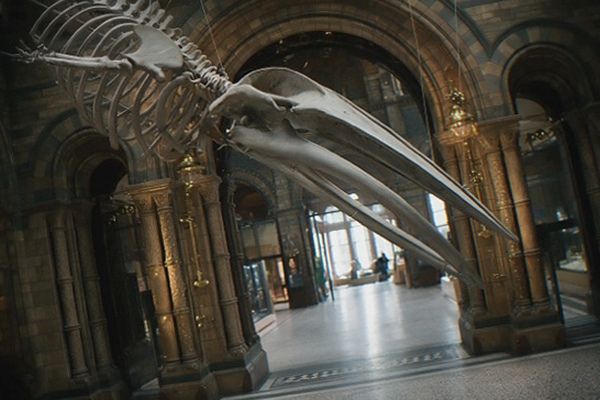
The Natural History Museum holds 80 million specimens, and the stars are unmistakable. The blue whale skeleton suspended in Hintze Hall is the first thing most visitors see, and the dinosaur galleries, including the animatronic T. rex that has terrified small children for decades, remain the busiest rooms in the building. The Earth galleries, with their escalator ride through a giant metallic globe, are the quiet sleeper hit. It is the most popular of the three with families, and the queues reflect that on weekends and school holidays.
The Science Museum is the engineer's museum. It traces technology from steam engines and early locomotives through flight, computing and space exploration, with the Apollo 10 command module among its headline objects. Its gallery of interactive exhibits, Wonderlab, is paid and aimed squarely at children, but the permanent collection floors are free and reward visitors who like machines more than mounted animals. The Making the Modern World gallery, a single hall of icons from Stephenson's Rocket to a Cray supercomputer, is the fastest way to see the sweep of industrial history in one room.
The V&A is the odd one out and the most underappreciated. It is the world's largest museum of applied and decorative arts: sculpture, fashion, jewellery, ceramics, photography, furniture and architecture, spread across gallery after gallery. Where the Natural History Museum is loud and full of school groups, the V&A is calm and full of beautiful rooms. The Cast Courts, containing full-scale plaster reproductions of Trajan's Column and Michelangelo's David, are worth the trip alone, and the fashion galleries trace clothing from the eighteenth century to the present. Our V&A highlights piece goes deeper on what to see inside.
If you want a guided experience rather than finding your own way through the dinosaur halls, a highlights tour of the Natural History Museum is worth considering: it compresses the best of the collection into a couple of hours with an expert leading the way.
A note on the third card above: the Moco Museum is not in South Kensington. It sits at Marble Arch, on the other side of Hyde Park, but it makes a useful contrast when planning, because it is one of the few art museums in central London that charges admission, from $31.02 on the live listing, while the V&A two miles away charges nothing for a collection many times larger. Modern and contemporary art fans weighing the two should know that difference before they travel.
How Much Does It Cost To Visit?
All three South Kensington museums are free to enter, year-round, with no ticket needed for their permanent collections. What costs money is the extras: special exhibitions at all three, and paid attractions inside the Science Museum such as Wonderlab, Power Up and the IMAX. A family can spend nothing at all, or a great deal, depending on what they add on.
The free entry is genuine and unconditional. You do not need a ticket, a pass or a booking slot for the permanent collections of the V&A. The Natural History Museum recommends a free advance entry ticket during busy periods, but it is a recommendation, not a requirement. The Science Museum similarly recommends a free timed ticket for general admission, and during peak periods it may be the practical way in.
What catches visitors out is the paid layer. Special exhibitions at all three museums are ticketed separately, and the big autumn and spring blockbusters can sell out weeks ahead. Inside the Science Museum, Wonderlab, the interactive gallery, carries its own charge, as do the Power Up gaming sessions and IMAX films. None of these are hidden, but families budgeting for a "free day out" should decide in advance whether they will say yes to them, because children will absolutely ask.
| Museum | Permanent collection | What still costs money |
|---|---|---|
| Natural History Museum | Free | Special exhibitions, some events |
| Science Museum | Free (timed ticket recommended) | Wonderlab, Power Up, IMAX, special exhibitions |
| V&A | Free | Temporary exhibitions, some events |
For visitors who prefer structure over self-guiding, a paid guided tour of the Natural History Museum starts from $6.77 on the operator's live listing, and covers the collection's highlights with a guide. It costs money that free entry does not, but it buys expertise and a route, which for a first visit can be a fair trade.
Do You Need To Book Tickets In Advance?
You do not need to book for the V&A's permanent collection at all. The Natural History Museum and the Science Museum both recommend a free advance ticket for busy periods, and the Science Museum uses timed entry, so booking ahead is the practical choice there. Paid exhibitions at all three museums should be booked in advance, because popular ones sell out.
The distinction matters because "free" and "no booking" are not the same thing. The V&A requires no booking for general admission: you can decide on the day, walk up and enter. The Natural History Museum recommends a free entry ticket during busy periods, especially weekends and school holidays, and the queue for walk-up entry at peak times can stretch well past the front steps. Booking the free ticket costs nothing and takes minutes, so there is little reason not to.
The Science Museum is the strictest of the three, with timed entry in operation, so a free timed ticket is effectively required at busy times rather than merely polite. Our Natural History Museum queue-avoidance guide covers the tactics in detail, but the headline is simple: arrive at opening time or after 3pm, and book the free ticket either way.
For the paid layer, the rules reverse completely. Special exhibitions, Wonderlab and the IMAX are all conventional ticketed attractions with finite capacity, and the popular ones, particularly the V&A's fashion blockbusters and the Natural History Museum's wildlife photography shows, sell out in advance. If a specific exhibition is the reason for your trip, book it before you leave home. If nothing specific draws you, the permanent collections need nothing more than a free ticket and comfortable shoes.
How Do You Do Two Museums In One Day?
Pick one museum for the morning at opening time, take a proper lunch break outside the museums, then do the second museum after 2pm when the morning crowds thin. Do not attempt all three. Two museums in one day is comfortable; three is a blur, because each of these buildings is bigger inside than it looks from the street.
The single biggest mistake in South Kensington is treating the cluster like a checklist. Each museum is a half-day institution done properly, and museum fatigue is real: by hour four most people are walking past world-class objects without registering them. The two-museum day works because it forces a choice, and choosing is easier than it sounds because the three collections barely overlap. Nobody agonises between dinosaurs and Renaissance sculpture; they already know which one they want. The wider set of guides lives on London Museums.
The recommended rhythm looks like this. Start at whichever museum is your priority, at opening time, before the queues form. Give it two and a half to three hours, which is enough for the highlights without exhausting yourself. Then leave. South Kensington has plenty of cafes, but the museums themselves are where the crowds eat lunch; a walk to a restaurant on Gloucester Road or Brompton Cross resets the brain better than a sandwich in a basement seating area. Return for museum number two after 2pm, when the school groups have largely gone home and the light is better.
| Pairing | Why it works | Watch out for |
|---|---|---|
| Natural History + V&A | One minute apart, opposite sides of the same road | NHM queues in the morning; do it first |
| Science Museum + V&A | Calmer pair, fewer families | Both are deceptively large |
| Natural History + Science Museum | The family combo | Heaviest crowds of any pairing |
The pairing that works best for most first-time visitors is the Natural History Museum in the morning and the V&A in the afternoon. The two face each other across Cromwell Road, so there is no transit time at all between them, and the contrast, from roaring dinosaurs to serene sculpture courts, keeps the second museum feeling fresh rather than repetitive. Families usually invert it, doing the Natural History Museum and Science Museum, which share a corner on Exhibition Road, and skipping the V&A until the children are older. Our 3-day London museum itinerary slots this neighbourhood into a longer trip.
Which Museum Is Best For Kids?
The Natural History Museum is the best of the three for children, with dinosaurs, the whale skeleton and the Earth galleries as guaranteed hits. The Science Museum is a close second, especially with Wonderlab, its paid interactive gallery, for ages roughly six and up. The V&A is the least child-focused, but it is free, calm and a good fallback for a short visit with younger children in tow.
Age matters more here than the museum itself. Under-fives are happiest in the Natural History Museum, where the big animals do the entertaining, and where the escalator through the metallic Earth globe is an attraction in its own right. Six to eleven is the sweet spot for the Science Museum, particularly with a Wonderlab ticket, which turns science into something children can pull, launch and splash. Teenagers split: mechanically minded ones gravitate to the Science Museum's space and computing floors, visually minded ones to the V&A's fashion and photography galleries.
The V&A is often written off for families, and unfairly. It has no dinosaur, but it has the Cast Courts, where a full-size reproduction of Michelangelo's David stops most children cold, and the jewellery galleries, which are compact and glittering. Because it is the calmest of the three, it is also the best place to recover when the Natural History Museum's crowds get too much. The full city-wide picture, including museums outside this neighbourhood built specifically for children, is in our London museums for kids guide.
One practical warning: the Natural History Museum on a weekend during school holidays is not a calm place. It is free, and it is mobbed, and the two facts are related. Families with flexibility should target a weekday morning in term time if at all possible, or accept the crowds and book the free advance ticket so at least the queue is shorter.
What Else Is Near The Museums?
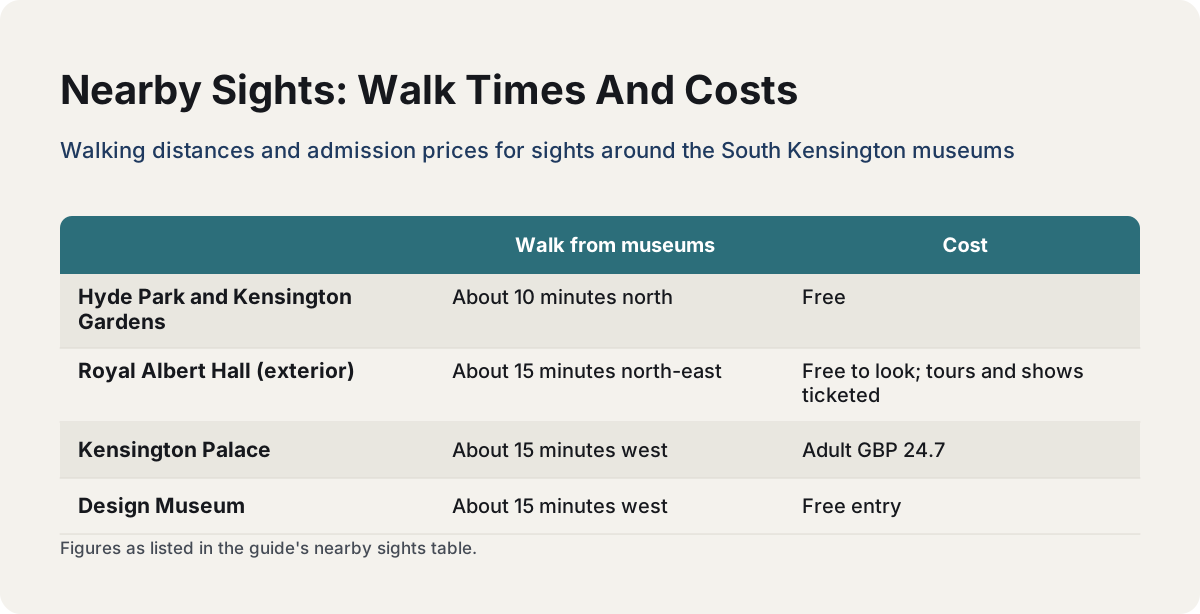
Hyde Park and Kensington Gardens sit directly north of the museum quarter, Kensington Palace is about fifteen minutes' walk west, and the Royal Albert Hall faces the parks to the north-east. The Design Museum is a short walk west on Kensington High Street, and Gloucester Road and South Kensington have the best eating options within walking distance.
The neighbourhood rewards walkers. From the Natural History Museum's front steps, Hyde Park is about ten minutes north, and the Albert Memorial and Royal Albert Hall sit at the park's south-eastern corner, roughly fifteen minutes away. Kensington Palace, ticketed at GBP 24.7 for adults, is about fifteen minutes west through Kensington Gardens, which makes a palace-and-museums day entirely feasible, though it is a full one. Our Kensington Palace worth-it piece covers whether the interior justifies the ticket.
Eating is the other thing people underestimate. The museum cafes are functional and expensive, and at lunchtime they are the most crowded rooms in the buildings. Gloucester Road, five minutes west, has a dense run of restaurants and pubs at ordinary London prices, and it is where museum staff actually eat. Brompton Cross, south of the V&A, is the smarter option for a sit-down dinner after the museums close.
| Nearby sight | Walk from museums | Cost |
|---|---|---|
| Hyde Park and Kensington Gardens | About 10 minutes north | Free |
| Royal Albert Hall (exterior) | About 15 minutes north-east | Free to look; tours and shows ticketed |
| Kensington Palace | About 15 minutes west | Adult GBP 24.7 |
| Design Museum | About 15 minutes west | Free entry |
When Are The Museums Open, And When Should You Go?
The South Kensington museums are open daily through the week, including Mondays, unlike many museums in Paris and Amsterdam, typically from mid-morning to late afternoon or early evening. Weekday mornings in term time are the quietest visits; weekends and school holidays are the busiest, and late-opening evenings are an underused trick for avoiding crowds.
London's museum closure habits surprise European visitors: most London museums, including all three here, open on Mondays, so the Monday-museum problem that plagues trips to Paris simply does not exist here. Our London museums open on Monday guide lists the full picture across the city.
For timing, the pattern is predictable. Opening hour is golden: the Natural History Museum's dinosaur galleries are genuinely pleasant at 10am and genuinely packed by noon. Mid-afternoon, from about 3pm, the crowds thin again as school groups depart and families run out of stamina. If either museum runs late-opening evenings, those are the quietest hours of all, though schedules vary and should be checked on each museum's own site before you plan around them.
Season matters too. The museums are indoor attractions, which makes them high season in wet weather, and London's wet weather is not confined to any season. August and the February and May half-term weeks are the domestic peaks, because that is when British schools are out. A Tuesday in November is about as quiet as this neighbourhood ever gets.
Should You Take A Guided Tour Or Go Solo?
Go solo if you like wandering and have time to spare, since entry is free and the buildings are easy to find your way around. Take a guided tour if you have limited time, want depth rather than breadth, or are visiting with children whose attention needs a narrative. The Natural History Museum's tours, from $6.77 on the live listing, are the most popular guided option in the quarter.
The honest case for solo is strong here. Free entry means a solo wander costs nothing, all three museums have good floor plans and signage, and the highlights, the whale, the dinosaurs, the Cast Courts, the Apollo capsule, are easy to find without help. A visitor with a full day and no particular agenda will do fine alone.
The case for a guide is about compression. Two hours with an expert covers more ground, and more of the stories behind the objects, than four hours of self-guided walking, and for visitors on a short trip that trade is worth real money. It is also worth it for the second museum of the day, when energy is low and a guide's momentum carries you past the exhibits you would otherwise skip.
The V&A's own guided options are the quietest way into a collection that can feel overwhelming at first encounter: gallery after gallery with no obvious front door. A tour that starts with the Cast Courts and the sculpture galleries gives the building a spine, and the fashion and jewellery floors then make sense as branches of the same story rather than a maze.
The contrast case is the Moco Museum at Marble Arch, a 25-minute walk north through Hyde Park. It is a small, paid, modern-and-contemporary art museum, from $31.02 on the live listing, and it exists at the opposite end of the spectrum from the free encyclopedic collections of South Kensington. Visitors whose real interest is Banksy and Warhol rather than dinosaur bones and Renaissance sculpture may find it the better use of a half day, and knowing that before you travel is the point of comparing them.
Common Questions About South Kensington Museums
Are all three South Kensington museums really free?
Yes. The Natural History Museum, the Science Museum and the V&A all offer free entry to their permanent collections year-round, with no ticket required for the V&A and a free advance ticket recommended at the other two during busy periods. Only special exhibitions and paid attractions like Wonderlab cost money.
Can you do all three South Kensington museums in one day?
Physically, yes, but it is not recommended. Each museum is a half-day experience done properly, and museum fatigue sets in after three or four hours. Two museums in one day is the comfortable maximum; three in one day leaves most visitors remembering very little of the third.
Which South Kensington museum should I visit if I only have time for one?
Families and anyone interested in the natural world should pick the Natural History Museum. Visitors who prefer machines, space and technology should pick the Science Museum. Anyone drawn to art, design, fashion and sculpture should pick the V&A, which is also the calmest of the three.
What Tube station is closest to the South Kensington museums?
South Kensington station, served by the Piccadilly, Circle and District lines, is about five minutes' walk away, and a pedestrian tunnel from the station exits close to the museums. Gloucester Road station is a slightly longer walk to the west and is often a quieter way in.
Do I need to book the South Kensington museums in advance?
The V&A needs no booking for its permanent collection. The Natural History Museum and Science Museum recommend free advance tickets, and the Science Museum operates timed entry, so booking the free ticket is the practical choice at busy times. Paid exhibitions at all three should be booked ahead because popular ones sell out.
Are the South Kensington museums good for children?
Yes, especially the Natural History Museum, whose dinosaurs and whale skeleton are reliable hits, and the Science Museum, whose Wonderlab interactive gallery suits children from about six up. The V&A is calmer and less child-focused but still free and worth a shorter visit.