Natural History Museum
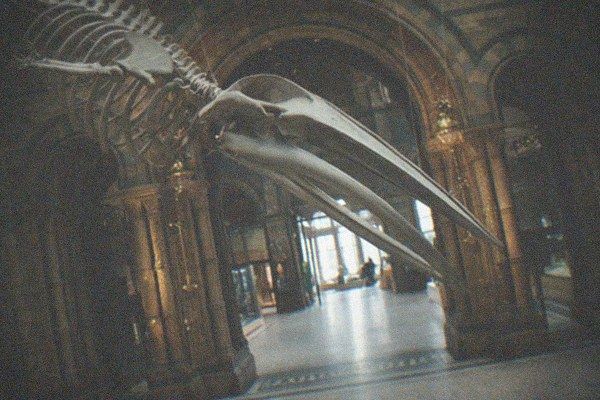
South Kensington, Cromwell Road · Hope the blue whale skeleton in Hintze Hall
Vast collection of natural specimens including dinosaurs, mammals, and minerals.
Free entry, no ticket needed.
Free entry, no ticket needed.
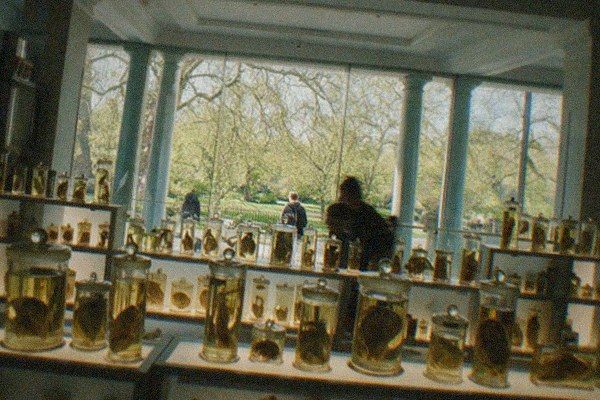
John Hunter's 18th-century anatomical collection (reopened 2023).
Plan your visit →Opens the museum's own visitor page. There is nothing to book: the permanent collection is free.
The Hunterian Museum is a collection of anatomical and surgical specimens at the Royal College of Surgeons of England, facing Lincoln's Inn Fields. It suits adults with a genuine curiosity about medicine, anatomy and the history of surgery. It is not a children's museum, and entry costs nothing.
The core of the museum is John Hunter's 18th-century anatomical collection, some 3,000-odd specimens of preserved human and animal anatomy arranged across three glass-lined gallery floors. The museum reopened in 2023 after a five-year closure for the building's redevelopment, and Hunter's collection is displayed much as he intended it: as evidence, ordered by bodily structure and by comparison across species. Around it sit surgical instruments, modern additions and displays tracing the College's history.
Hunter was a Scottish surgeon working in London in the second half of the 1700s, and his approach was unusual for the time. Rather than relying on classical texts, he collected, dissected and compared, treating anatomy as an empirical science. The gallery that carries his name presents his specimens in tall cases that run the height of the room. Some are ordinary teaching preparations: blood vessels injected with wax to show their branching, organs sectioned to reveal internal structure. Others are striking in themselves, including the skeleton of the Irish giant Charles Byrne, which Hunter acquired in 1783 and which the College announced it would remove from display. Check the museum's own site for its current status if that specimen is part of why you are going.
Beyond Hunter, the museum traces surgery from craft to profession. Instrument displays show the shift from the 18th-century surgeon's basic kit of knife, saw and forceps to the antiseptic era and beyond. There are displays on how surgery has interacted with empire and with the ethics of specimen collecting, which the museum addresses more directly than most institutions of its age. The redevelopment gave the curators an opportunity to reframe the collection, and the result acknowledges the human beings behind the specimens rather than presenting them as neutral objects.
The building itself matters to the visit. The Royal College of Surgeons of England occupies a classical building on the south side of Lincoln's Inn Fields, and the museum sits at its heart. The space is deliberately old-fashioned in feel: dark cases, dense rows of jars, low light. Visitors who enjoy the Victorian gallery aesthetic of places like the Natural History Museum's older halls will recognise the mood, though the subject matter here is far more clinical.
Entry is free to all, year round, and no ticket is needed. There is nothing to buy in advance for standard admission. Some events and special displays do carry a charge, and those are the only things you would pay for. For anything beyond the permanent collection, check the current price on the museum's own site.
This makes the Hunterian one of the more straightforward free museums in central London, in a city where free entry is common but frequently paired with paid exhibitions. The permanent galleries cost nothing and require no booking. Where a fee exists, it applies to talks, tours and temporary or special displays, which the museum lists individually. The museum's own site at rcseng.ac.uk is the place to confirm current prices for those extras.
For families, children under 18, and children generally, are admitted free. The museum may ask that groups book in advance, and school or group visits typically need to be arranged ahead of time, so if you are bringing more than a household's worth of children, contact the museum first. Individual families visiting during normal opening hours generally just walk in.
A word on what the museum is not. It is an anatomical collection, and the permanent displays include preserved human remains, surgical specimens and medical artefacts that some visitors find confronting. There is no age ban, and families do visit, but it is worth thinking about the child in question rather than the ticket price, which is zero in every case.
| Item | Cost | Notes |
|---|---|---|
| Standard entry, permanent galleries | Free | No ticket needed, year round |
| Children | Free | Advance booking may be required for groups |
| Events | On the museum's site | Paid; varies by event |
| Special displays | On the museum's site | Paid; listed individually on the official site |
Most visitors should allow around one to two hours. The museum is compact, a single sequence of galleries rather than a sprawling campus, but the displays are dense and reward slow looking. Confirm opening hours on the museum's own site before travelling, as they change and are not fixed in this guide.
The practical rhythm of a visit is roughly this: the Hunterian gallery with the anatomical collection takes the longest, easily an hour if you read cases properly, and the surrounding displays on surgical instruments and the College's history add another thirty to forty-five minutes. Visitors with a medical background or a strong interest in the history of science routinely spend longer. Anyone expecting a half-day institution will be finished early.
Because it is small, the museum can feel busy in its peak hours, and because entry is free there is no pricing signal to shift crowds. Midweek mornings are the calmest window on the pattern of comparable central London museums. Weekends and school holidays see more families, though this is not a venue that draws the crowds of the big South Kensington institutions. There is no timed entry to plan around for the permanent collection.
Pair the timing with the surrounding area. Lincoln's Inn Fields is one of the largest public squares in London, pleasant for a walk in good weather, and the Inns of Court to the south and east are quiet on weekends when the legal profession is away. A morning visit to the Hunterian followed by a wander through Lincoln's Inn makes a coherent half-day without any further planning.
| Practical Detail | At A Glance |
|---|---|
| Entry price | Free, no ticket needed |
| Time to allow | One to two hours |
| Opening hours | On the museum's site |
| Closed days | On the museum's site |
| Nearest area | Lincoln's Inn Fields, Holborn |
| Included in entry | Permanent galleries and John Hunter's collection |
The museum sits on Lincoln's Inn Fields in Holborn, central London, at the Royal College of Surgeons. It is a short walk from several Underground stations in Zone 1. Photographs are generally permitted but check the museum's policy on arrival, and note that the collection includes human remains, which shapes how the space is used and how visitors are expected to behave.
The museum's coordinates are 51.51528, -0.11587, on the south side of the square. Holborn station is the nearest Underground stop, served by the Central and Piccadilly lines, and Temple, Chancery Lane and Holborn are all within reasonable walking distance. The museum's own site lists step-free access provision and current facilities, and this guide does not repeat those details from memory. Anyone with specific access requirements should confirm with the museum directly before visiting.
On bags and security, standard central London museum practice applies, but the museum's site carries the authoritative policy. There is no shop the size of a major museum's, and the building is a working professional institution as well as a museum, so facilities are more modest than at the large nationals. Eating nearby is easy: Holborn and the streets around Lincoln's Inn Fields have plenty of cafes and pubs at ordinary London prices.
Two final practical points. First, the museum is close to the legal quarter, which means weekday streets are busy with office workers and weekends are quiet and slightly empty, a nice contrast for photographers. Second, the museum's own site at rcseng.ac.uk publishes the current opening hours, any planned closures and details of paid events, so a two-minute check before you set out is worthwhile.
The Hunterian suits adults and older teenagers with an interest in medicine, anatomy or the history of science, and it is a genuinely unusual free visit for anyone in that camp. It does not suit very young children, visitors hoping for interactives and family activities, or anyone uncomfortable with preserved human remains and anatomical specimens.
For medical professionals, students and historians of science, this is one of the most significant collections in the country, and free entry makes it an easy repeat visit. For the general adult visitor, it is a short, striking, memorable hour, but it is a contemplative one. The displays are text-rich and the lighting is low, and there are no buttons to press or screens to swipe. Visitors who love the specimen-heavy atmosphere of older natural history museums will feel at home; those who prefer the interpretive, designed-exhibition style of newer institutions may find it austere.
It earns its place in a London itinerary for its distinctiveness. In a city full of free museums, the Hunterian is the only one dedicated to anatomy and surgery in this way, and the depth of Hunter's collection gives it an authority that modern science museums cannot replicate. It pairs naturally with a broader history-of-science thread through the city: the Royal Observatory covers astronomy and timekeeping from a different angle, and the Natural History Museum carries its own anatomical and taxidermy holdings on a much larger scale.
Be honest about the content before recommending it to others. Preserved foetal specimens, diseased organs and historical surgical instruments are part of the permanent display. The museum handles this sensitively, with context and discussion of the ethics of collection, but sensitivity does not change what is in the jars. That is the museum. Some people will find it the most interesting free hour in London.
The museum's immediate surroundings are the Inns of Court, Lincoln's Inn Fields and Holborn, which make an excellent pairing in themselves. Within a short walk there are Sir John Soane's Museum, the British Museum, Covent Garden and the legal quarter's quiet Georgian squares. A half-day plan combining two or three of these works well and costs nothing.
The closest pairing, geographically, is Sir John Soane's Museum on the north side of Lincoln's Inn Fields, literally across the square. Soane's house museum is one of the oddest and best small museums in London, an architect's home packed with antiquities and hoarded wonders. It shares with the Hunterian a 19th-century collector's sensibility, and the two make a natural single outing. Check its entry arrangements on its own site before going, as it handles numbers differently from the Hunterian.
Heading east, Holborn leads to the British Museum, perhaps fifteen to twenty minutes on foot, itself free to enter. Heading south and east from there, Covent Garden and the theatre district offer the standard London diversion of shops, street performers and restaurants. The Inns of Court, Lincoln's Inn, Gray's Inn and the Temple, sit immediately to the south and are worth walking through in their own right: masonry chambers, hidden gardens and churchyards that most visitors never find.
For visitors building a science-themed itinerary, the Hunterian is the anatomy chapter. The Natural History Museum in South Kensington covers the natural world at large, and the Royal Observatory covers astronomy, navigation and time itself. None of these require a ticket for their core collections either, which makes a multi-stop day in London's scientific institutions one of the better value days out the city offers.
Yes. Entry is free to all, year round, and no ticket is needed for the permanent galleries. The only things that cost money are some events and special displays, and those are listed individually on the museum's own site.
No. Children and under-18s are admitted free. Advance booking may be required for some visits, particularly groups, so contact the museum ahead of time if you are bringing more than a small family group.
It is at the Royal College of Surgeons of England on Lincoln's Inn Fields in Holborn, central London. Holborn Underground station, on the Central and Piccadilly lines, is a short walk away, and several other stations are within walking distance.
Roughly one to two hours. The museum is compact but the displays are dense, and visitors with a particular interest in anatomy or medical history often stay longer. Opening hours are published on the museum's own site, so check those before travelling.
It is known for John Hunter's 18th-century anatomical collection, several thousand preserved human and animal specimens arranged across the gallery floors. The museum reopened in 2023 after a five-year closure and redevelopment of the College building.
General museum practice applies, but the authoritative policy is published by the museum itself. Note that the collection includes preserved human remains, which is treated with appropriate care and which shapes the museum's expectations of visitors.
Some events and special displays do carry a charge, while the permanent galleries, including Hunter's collection, remain free. Check the current price on the museum's own site for anything beyond the standard collection.
There is no age restriction and children enter free, but the displays include preserved anatomical specimens and human remains. It suits older children and teenagers with a genuine interest in science better than it suits very young visitors expecting hands-on activities.
South Kensington, Cromwell Road · Hope the blue whale skeleton in Hintze Hall
Vast collection of natural specimens including dinosaurs, mammals, and minerals.
Free entry, no ticket needed.
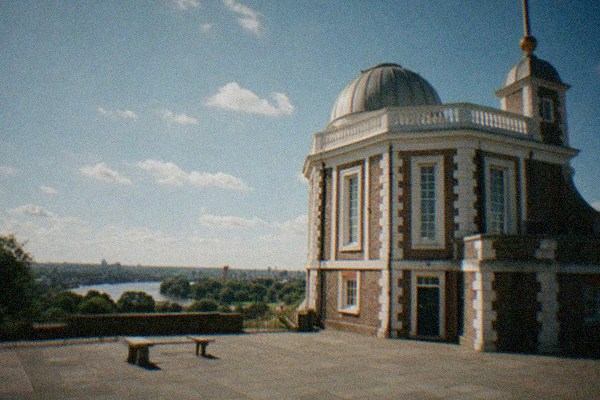
Greenwich · Astronomy and navigation history in Greenwich Park.
Home of Greenwich Mean Time and Prime Meridian with planetarium.
from $32.54per person, live price on the listing Check availability →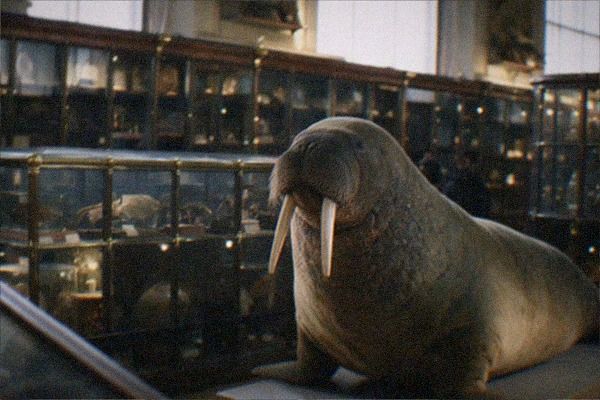
Forest Hill, London Road · Aquarium and gardens
Natural history, anthropology, and music collections with gardens.
Free entry, no ticket needed.