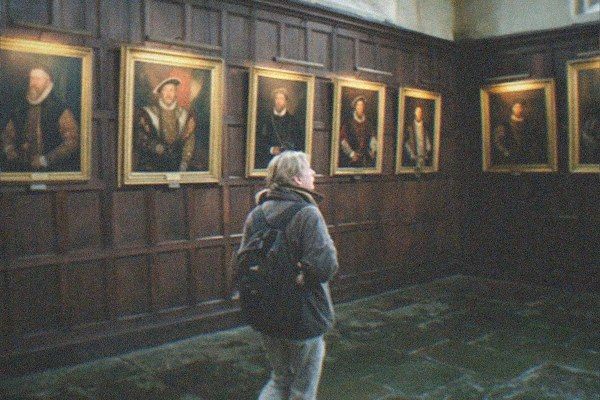
National Portrait Gallery
Westminster, St Martin's Place · Tudor portraits
Portraits of historically important and famous British people.
Free entry, no ticket needed.
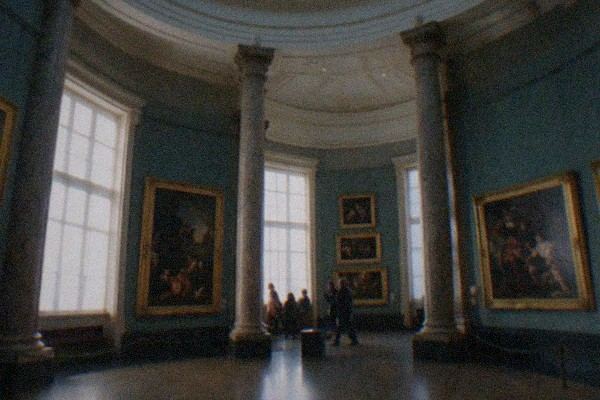
Free entry, no ticket needed.
Van Gogh's Sunflowers
Plan your visit →Opens the museum's own visitor page. There is nothing to book: the permanent collection is free.
The National Gallery is Britain's national collection of Western European painting, from the 13th to the 19th century, sitting on Trafalgar Square. It suits first-time visitors, art lovers, and anyone who wants world-famous paintings without paying for the privilege.
The National Gallery holds the national collection of Western European painting, from the 13th to the 19th centuries, in a grand building on Trafalgar Square in Westminster. Its best-known single work is Van Gogh's Sunflowers. The permanent collection spans roughly 700 years of European painting.
Van Gogh's Sunflowers is the painting most visitors ask the floor staff to point them towards, and it is easy to see why. Painted in Arles in 1888, it is one of a small series of sunflower canvases Van Gogh made to decorate the Yellow House for Paul Gauguin's arrival. The London version is the one the artist considered the finest of the bunch. It hangs alongside other late Van Gogh works, including Long Grass with Butterflies, in the gallery's Impressionist rooms, and it draws a steady crowd for most of the day.
The collection is arranged broadly by period and national school. You move from the gold-grounded altarpieces of the 13th and 14th centuries, through the Italian Renaissance, into Dutch and Flemish painting of the 17th century, and on to the French Impressionists and Post-Impressionists of the 19th. The Italian rooms alone would justify a national gallery: Leonardo's The Virgin of the Rocks, Botticelli's Mystic Nativity, Raphael's Mond Crucifixion, and several Titians. Michelangelo's unfinished The Manchester Madonna sits a short walk from them.
The Dutch 17th century is another strength. Rembrandt is represented across his career, including two late self-portraits that sit face-on to the visitor and refuse to flatter him. Vermeer's A Young Woman Seated at a Virginal holds a quieter room nearby. Elsewhere: Velázquez's The Toilet of Venus, Turner and Constable hanging in the same rooms as a pointed bit of curatorial rivalry, Seurat's Bathers at Asnières dominating a wall of French pictures, Monet, Cézanne, Degas, and one of the finest Constable landscapes anywhere.
If you are building a London itinerary around painting, the National Gallery is the historic anchor. For collectors' works of the same French period in a more intimate setting, the Courtauld Gallery in Somerset House complements it well, and Tate Modern picks up the story where this collection deliberately stops, at around 1900.
Entry to the National Gallery is free to all, year round, and no ticket is needed for the permanent collection. Some special exhibitions and events carry a separate charge, and those are the only things you need to pay for. Children under 18 go free.
This is the key fact, and it saves people money every day: the permanent collection, the Sunflowers, the Leonardos, the Rembrandts, all of it, is free. You can walk in off Trafalgar Square without booking anything. The gallery keeps this policy year round, so there is no seasonal catch.
Paid special exhibitions are the exception. Major shows in the gallery's exhibition wing charge admission, and busy periods or popular exhibitions may require or at least strongly recommend advance booking, including for free entry. If a big show is your reason for going, book ahead through the gallery's official site and check the current price there, since exhibition prices change from show to show and we do not print figures we have not verified.
Third-party resellers also list the National Gallery online. One platform currently lists it from $27.09 USD per person, rated 3.7 across 196 reviews. Treat those numbers carefully: a platform from-price in dollars is never the same thing as the GBP door price, and in this case the door price for the collection is nothing at all. Those listings typically bundle a guided tour or a timed slot with the otherwise free entry, so what you are actually buying is the tour and the convenience, not admission. If you only want to see the paintings yourself, the direct route costs you nothing.
| Entry Route | What It Covers | Price |
|---|---|---|
| Walk-up entry, permanent collection | All collection rooms including Van Gogh's Sunflowers | Free, no ticket needed |
| Under-18s | Same entry as adults | Free |
| Special exhibitions and events | Temporary shows, some talks and events | Check the current price on the museum's own site |
| Third-party guided listing | Entry plus a guided tour or timed slot | Listed from $27.09 USD per person on the platform, rated 3.7 from 196 reviews |
One practical note: because entry is free, the gallery does not run the kind of timed-entry pressure the big ticketed museums do, but queues for blockbuster exhibitions are a different matter. For anything with a price attached, arriving with a pre-booked slot is the smoother route.
Serious visitors should allow half a day for the National Gallery, while two hours covers a focused route through the highlights. Weekday mornings are the quietest time. The gallery sits directly on Trafalgar Square, so it pairs naturally with anything in central Westminster.
The building is bigger than the Trafalgar Square facade suggests, spread across the main floor, the Sainsbury Wing, and various mezzanine levels. A highlights circuit, Sunflowers, Leonardo, one Rembrandt room, the Impressionists, takes about ninety minutes at a steady pace. A full sweep of the collection, done properly with pauses, is closer to four hours. Most people land somewhere in between and leave wishing they had booked more time, not less.
Timing matters. Weekday mornings are noticeably calmer, and the first hour after opening is when you get Sunflowers without a crowd three deep. Weekends and wet afternoons fill up fast, since a free world-class collection is London's default rainy-day plan and everyone knows it. School holidays add families, which suits the gallery's temperament fine, but adds bodies to the bottlenecks around the most famous works.
Check the current opening hours on the museum's own site before travelling. Closing days and late-opening evenings shift with the season and with exhibition programmes, and we do not print hours we have not verified. If your plan depends on a specific evening or a Monday visit, confirm it against the official page.
| At A Glance | Detail |
|---|---|
| Location | Trafalgar Square, Westminster |
| Coordinates | 51.50872, -0.12859 |
| Opening hours | On the museum's site |
| Closed days | On the museum's site |
| Time to allow | 2 hours for highlights, half a day for the collection |
| Nearest stations | On the museum's site, but the Square is served by both Leicester Square and Charing Cross, steps from the door |
| Collection | Western European painting, 13th to 19th centuries |
| Best-known work | Van Gogh's Sunflowers |
A sensible rhythm for one day: morning in the gallery, lunch around Trafalgar Square or up in Soho, then an afternoon elsewhere. The gallery's central position means you can slot it before or after almost anything in the West End without doubling back.
The National Gallery faces Trafalgar Square in Westminster, at coordinates 51.50872, -0.12859, with Leicester Square and Charing Cross stations both a short walk away. Entry is free, under-18s are free, and busy periods may call for advance booking. Bag checks and security screening apply on arrival.
Getting there is simple. Charing Cross, both the mainline terminus and the Underground station, is the closest rail interchange, a few minutes on foot. Leicester Square Underground is barely further and often the better bet from the Piccadilly line. Piccadilly Circus and Embankment are within a comfortable walk. Given the Square's position at the junction of the West End, Westminster, and the river, most visitors arrive on foot anyway, having walked from Covent Garden or along Whitehall.
Security screening operates at the entrances, as at every major London museum. Allow a few extra minutes at peak times, and travel light. Large bags and suitcases are not the friend of any gallery visit, and specific rules on luggage size and storage are best checked on the museum's own site, since they are set by the venue and can change with the exhibition programme. Photography of the collection is generally permitted without flash, but check the official guidance for restrictions in loan exhibitions.
On accessibility: the gallery's official site carries the current access statement, covering step-free entrances, lift access to all floors, and the facilities available. The building is an old one, joined together from several phases of construction, so entrances and lift routes matter and are worth reading up on before you arrive if step-free access is a priority. Wheelchairs and assistance arrangements are handled by the gallery directly.
Families are well served. Under-18s are free, and the gallery runs family activities and trails, with the current programme listed on the official site. If your group mixes generations and wants art without exhaustion, the free entry means a family can visit for an hour and leave guilt-free, which is the right way to see it with children. For a smaller, more playful stop nearby afterwards, the Moco Museum offers modern and street art in a compact space that younger visitors tend to enjoy.
The National Gallery's Trafalgar Square location puts it within a short walk of the National Portrait Gallery next door, the Courtauld Gallery at Somerset House, Leicester Square, Covent Garden, and the government buildings of Whitehall. A one-mile loop can fill an entire day with art and street life.
Start next door. The National Portrait Gallery shares the same building block and reopened after a major refurbishment; it is the natural pairing, and you can move between the two within minutes. If your interest runs to French Impressionism specifically, walk fifteen minutes east along the Strand to the Courtauld Gallery, whose collection of Manet, Cézanne, and Van Gogh is the most concentrated dose of that period in central London.
Trafalgar Square itself earns a pause. Nelson's Column, the Landseer lions, and the constant street performance make it one of the city's great public rooms. From the Square's south side, Whitehall runs past Horse Guards and Downing Street to Parliament Square and Westminster Abbey, a twenty-minute walk through the heart of government. North of the gallery, Leicester Square and Covent Garden take you into theatreland, with the London Transport Museum in Covent Garden Piazza as an easy add-on.
For a longer art day, the river route works well. Cross the Thames at Waterloo Bridge from the Strand and you arrive at the South Bank, where Tate Modern continues the story of art from 1900 onwards. Doing the National Gallery in the morning and Tate Modern in the afternoon gives you the entire sweep of Western painting and modern art in a single, ambitious day, with a memorable river walk between them.
Food and drink cluster towards Covent Garden and St Martin's Lane rather than the Square itself, though the cafe options inside and around the gallery are decent for a mid-visit rest. Book lunch ahead on weekends, since the whole area is dense with tourists doing exactly what you are doing.
Free entry means the National Gallery is one of the few world-class museums where the ticket question barely applies. You only pay for special exhibitions and events, and everything else, including the gallery's most famous paintings, costs nothing to see. That changes how you should plan a visit.
Most London museum guides approach the big institutions as ticket decisions: what price, what platform, which bundle. The National Gallery breaks that pattern. The permanent collection is free to all, year round, with no ticket needed, so the only genuine decisions are which special exhibition, if any, you want to pay for, and whether a busy period makes booking ahead sensible.
This also changes the shape of a visit. Because there is no sunk cost, you can drop in twice: a quick hour on a rainy afternoon for the Sunflowers and the Leonardos, then a longer return trip when a paid exhibition tempts you. Londoners do this constantly. Tourists who treat it as a one-shot, three-hour march tend to leave with gallery fatigue and an unfinished mental list.
Be sceptical about anything that makes free entry sound complicated. Third-party listings that charge a fee for what is fundamentally free admission, such as the listing currently showing a from-price of $27.09 USD per person, are selling a service layered on top, usually a guide or a timed slot. That can be a fair purchase if you value the guiding. It is not the price of entry. The only prices worth checking are the exhibition prices on the museum's own site, and those you should always verify before travel since they change with each show.
If you are the sort of visitor who likes structure, pick three paintings beforehand and build the route around them. The gallery's free floor plan, on the official site and at the information desks, makes that easy. Then let yourself get sidetracked, because the strength of this collection is that the sidetrack is usually better than the plan.
Yes. Entry to the permanent collection is free to all, year round, and no ticket is needed. You only pay for some special exhibitions and events. Children under 18 are also free, though advance booking may be required or recommended for busy periods and exhibitions.
General entry costs nothing. Paid special exhibitions and events carry separate charges, and you should check the current price on the museum's own site, since exhibition prices change from show to show. Any third-party listing price reflects a bundled tour or timed slot, not the cost of entry.
You do not need a ticket for the permanent collection. For special exhibitions and busy periods, advance booking may be required or recommended, especially for popular shows and peak times. If you are only seeing the free collection, walk-up entry works.
The gallery faces Trafalgar Square in Westminster, central London, at coordinates 51.50872, -0.12859. Charing Cross and Leicester Square stations are both a short walk from the door, and Covent Garden, Piccadilly Circus, and the West End are within easy walking distance.
Allow around two hours for a highlights route including Van Gogh's Sunflowers, or closer to half a day for a fuller sweep of the collection, which spans Western European painting from the 13th to the 19th centuries. Free entry means a short visit is a perfectly valid option.
Van Gogh's Sunflowers is the gallery's hallmark work, painted in 1888 as part of a small series the artist made in Arles. The London version is the one Van Gogh himself considered the finest. Other highlights include Leonardo's The Virgin of the Rocks and major works by Rembrandt and Velázquez.
Children are welcome and under-18s enter free, the same as adults. For busy periods and special exhibitions, advance booking may be required or recommended for the whole family. The gallery runs family activities, with the current programme listed on the official site.
We do not print hours we have not verified. Opening hours, late evenings, and any closed days change with the season and exhibition programme, so check the current times on the museum's own site at nationalgallery.org.uk before you travel.
Westminster, St Martin's Place · Tudor portraits
Portraits of historically important and famous British people.
Free entry, no ticket needed.
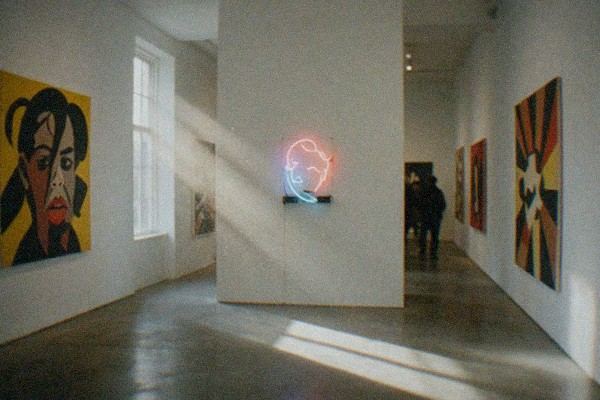
Marble Arch · Immersive digital and street art experiences.
Modern and contemporary art with Banksy, Basquiat, Warhol, Kusama.
from $31.02per person, live price on the listing Check availability →
Somerset House · Manet, Monet, Van Gogh, and Gauguin masterpieces.
Impressionist and Post-Impressionist art in Somerset House.
from $18.97per person, live price on the listing Check availability →