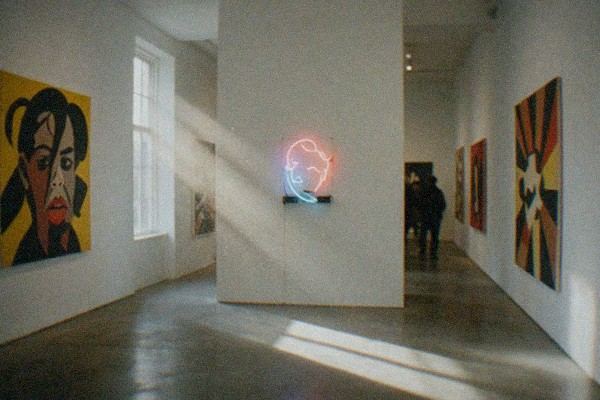
Moco Museum
Marble Arch · Immersive digital and street art experiences.
Modern and contemporary art with Banksy, Basquiat, Warhol, Kusama.
from $31.02per person, live price on the listing Check availability →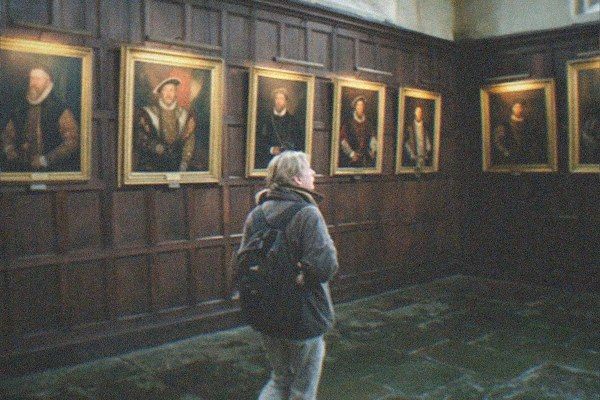
Free entry, no ticket needed.
Tudor portraits
Plan your visit →Opens the museum's own visitor page. There is nothing to book: the permanent collection is free.
The National Portrait Gallery sits just off Trafalgar Square and shows portraits of British people who shaped the country's history, from Tudor monarchs to modern cultural figures. It suits anyone interested in British history told through faces, and it works well as a short, free stop beside the National Gallery.
The gallery's core collection is portraits of historically important and famous British people, arranged so you walk through British history by face rather than event. Its hallmark is the Tudor portraits, including the famous likeness of Henry VIII, and these rooms are where most visitors start. Photography, painting, sculpture and video sit side by side across three floors of the building at St Martin's Place.
The Tudor rooms are the reason many people come. These are portraits painted when portraiture itself was a political tool: Henry VIII standing wide-legged in cloth of gold, Elizabeth I rendered again and again as an ageless icon, courtiers stiff with jewels and symbolism. The gallery's Tudor holdings are among the most significant in the world, and even visitors with no particular interest in the period tend to linger here because the faces carry the whole story of the reigns in a way text cannot. Do not rush the first floor.
From there the collection moves forward chronologically. The seventeenth and eighteenth centuries bring Civil War figures, Restoration wits and the intellectual circles of Enlightenment London. The Victorian rooms swell with writers, scientists and empire-builders, and the modern galleries mix politicians and actors with musicians, athletes and artists, including photographic and video portraiture. The famous recent portraits of the King and other members of the royal family sit near the contemporary displays, and the annual BP, now Taylor Wessing, Photographic Portrait Prize shows on the ground floor in season.
The 2023 reopening, after a three-year refurbishment, reshaped how all of this is experienced. The entrance now faces Trafalgar Square directly, a new staircase threads the historic building together, and previously closed sections were converted into public galleries. The result is a lighter, more navigable building than the somewhat forbidding place long-time Londoners remember. You can read the full collection story on the gallery's own site at npg.org.uk.
One thing to set expectations on: this is a portrait collection, not a general art museum. If you want landscapes, religious painting and the European old masters, the National Gallery is literally next door. The two make an obvious pairing, but they are different experiences and different visits.
Entry to the permanent collection is free to all, year round, with no ticket needed: you simply walk in. What costs money are some temporary exhibitions and events, and for those the gallery recommends advance booking, with free or reduced places for under-18s. A third-party platform also lists the museum from $40.64 USD per person, but that is a platform from-price, not the gallery's own pricing.
This distinction matters because it is the single most common confusion about this museum. The free route is real and permanent. You do not book anything, you do not pay a penny, and you get the full permanent collection across all floors, including the Tudor rooms the gallery is known for. Anyone telling you a paid ticket is required for the collection is selling you something the museum gives away.
Paid tickets apply when a major temporary exhibition is running. Those change through the year, prices vary by show, and the only reliable figure is the one published for the specific exhibition at the time you go, so check the current price on the museum's own site. For exhibitions, advance booking is recommended, and under-18s go free or at a reduced rate depending on the show. If a paid exhibition is your main reason for visiting, book it ahead; the collection itself you can decide on the day.
The third-party listing is a different product. One booking platform lists the museum from $40.64 USD per person, and that listing carries a 4.8 rating across 21 reviews. Treat it as a convenience product with its own mark-up, not as the museum's price list. If you want to read reviews before committing, our panel at the top of this page pulls the live listing, otherwise the gallery's own site sells you the same exhibitions at face value.
| Entry Route | Cost | What It Covers | Booking |
|---|---|---|---|
| Permanent collection | Free, all year | All collection galleries including Tudor portraits | No ticket needed |
| Temporary exhibitions | on the museum's site | Named ticketed exhibitions only | Advance booking recommended |
| Events and talks | on the museum's site | Individual events, varies by programme | Advance booking recommended |
| Under-18s (exhibitions) | Free or reduced | Same exhibition entry | Book with adult tickets |
| Third-party listing | from $40.64 USD per person | Platform package, not the gallery's own pricing | Rated 4.8 across 21 reviews |
A practical note on money: the gallery is a short walk from several other free museums, so a day built around St Martin's Place can cost almost nothing. The Courtauld Gallery at Somerset House is a paid contrast if you want one ticketed stop in the day, and its Impressionist rooms make a good companion to a morning of portraiture.
Allow roughly two hours for the permanent collection at a steady pace, or ninety minutes if you move quickly and focus on the Tudor rooms and one or two later floors. Visitors with a strong interest in British history easily spend half a day. Weekday mornings are the quietest window, and weekends and wet afternoons are the busiest.
Two hours is the honest figure for a first visit. The building is tall rather than sprawling, three floors arranged by period, so the visit runs as an ascending walk through time. People who try to do it in under an hour tend to come down having seen only the Tudors and the gift shop, which is a legitimate choice but not the whole museum. Add another hour, or sometimes two, if a major ticketed exhibition is on, because those occupy their own galleries and deserve separate time.
Timing makes a real difference here because the gallery is free and sits on Trafalgar Square, one of the busiest junctions in London. Weekday mornings, especially in the first hours after opening, are calm. Saturday afternoons and rainy days bring the overflow crowd from the square, and the narrow Tudor rooms in particular feel crowded at peak times because everyone clusters around the Henry VIII portrait. Late weekday afternoons are a reasonable second window. For exact opening hours and any closed days, check the museum's site, as these change through the year and are not something to guess at.
Season matters less than you might think, since this is an indoor attraction that functions identically in January and July. The exception is exhibition season: major shows open in spring or autumn, and the opening fortnight and final fortnight of a popular exhibition are the worst times to visit it. If a headline exhibition is your target, book the middle weeks and a weekday slot.
The gallery faces Trafalgar Square at St Martin's Place in Westminster. The nearest stations are Charing Cross for National Rail and Underground, and Leicester Square for the Underground, both within a few minutes' walk. Step-free access is available throughout the building following the 2023 refurbishment, and large bags should be avoided or checked, as space is tight in the historic rooms.
Charing Cross is the station most people should aim for, reached on the Bakerloo line and by mainline services from the south. Leicester Square, on the Northern and Piccadilly lines, is marginally closer from some approaches and usually the better choice if you are already underground in the West End. Both drops put you within about five minutes' walk. Buses along the Strand and Charing Cross Road stop nearby, and the gallery sits inside the extremely walkable block that also contains the National Gallery, so most visitors arrive on foot from somewhere in the West End anyway.
Access improved substantially in the 2023 reopening. Lifts now serve all the public floors, the new entrance from Trafalgar Square is step-free, and the building has accessible toilets. The gallery runs a programme of provision for deaf and disabled visitors, and current details of that programme are published on the gallery's official site. Assistance dogs are welcomed. If you have a specific access need, it is worth checking the site rather than assuming, because provisions for individual exhibitions can differ from the permanent galleries.
On bags: this is a central London gallery with narrow historic rooms, and the practical rule is to travel light. Large luggage and rucksacks can obstruct the Tudor rooms badly, and facilities for storing sizeable bags are limited, so plan to leave big items at your hotel. Standard day bags are fine. Photography without flash is generally permitted in the collection galleries but may be restricted in ticketed exhibitions; signage in each room is the reliable guide.
| At A Glance | Details |
|---|---|
| Location | St Martin's Place, Westminster, facing Trafalgar Square |
| Coordinates | 51.50928, -0.12832 |
| Nearest stations | Charing Cross (Rail and Underground), Leicester Square (Underground) |
| Opening hours | on the museum's site |
| Closed days | on the museum's site |
| Time to allow | About 2 hours for the collection |
| Entry cost | Free, no ticket needed; exhibitions priced on the museum's site |
| Step-free access | Yes, throughout the public floors |
The National Gallery is the obvious pairing, sharing the same block of Trafalgar Square and being reachable in under two minutes on foot. Beyond that, the Courtauld Gallery at Somerset House is about ten minutes away along the Strand, and Trafalgar Square itself, Whitehall and the West End theatres fill out a full day without needing transport.
The National Gallery is not merely near, it is adjacent, and the two are frequently mistaken for each other by first-time visitors. The division of labour is clean: the National Gallery holds the European paintings, Van Gogh's Sunflowers among them, while the Portrait Gallery holds the British faces. Doing both in one day is a classic London museum itinerary, and because both have free permanent collections, it costs nothing beyond your time. Four hours across the two, with a break, is realistic.
Ten minutes' walk up the Strand brings you to Somerset House and the Courtauld Gallery, a paid venue whose Impressionist and Post-Impressionist collection is one of the best in Britain. It makes a good contrast with the portrait collection, moving you from Tudor courts to Monet and Manet within an hour. Back in the other direction, the Moco Museum offers modern and street art for visitors who want something louder after the solemnity of the Tudor rooms.
The wider setting does a lot of work too. You step out of the gallery directly into Trafalgar Square, from which Whitehall runs past Horse Guards to Westminster and the river, a fifteen-minute walk through the machinery of the British state. Covent Garden's market and the theatre district sit five to ten minutes north. Practical advice: see the Portrait Gallery in a morning, take lunch in Covent Garden, and give the National Gallery the afternoon, when its late openings give you more room than the portrait galleries can.
Yes. Entry to the permanent collection is free to all, year round, and no ticket is needed. You only pay for some temporary exhibitions and events, and prices for those vary, so check the current price on the museum's own site before you go.
For the permanent collection, no booking is needed at all. For temporary exhibitions and events, advance booking is recommended, and under-18s get free or reduced entry. If a headline exhibition is your reason for visiting, book ahead, especially for weekend slots.
That is a platform from-price for a third-party listing, not the gallery's own pricing. It reflects a package sold through that platform, rated 4.8 across 21 reviews. The museum itself charges nothing for the collection and sets its own exhibition prices separately.
Its hallmark is the Tudor portraits, including the famous image of Henry VIII, and these rooms are among the most significant holdings of their kind anywhere. The wider collection shows portraits of historically important and famous British people from the Tudor era to the present day.
Roughly two hours for the permanent collection at a steady pace, and less if you focus only on the Tudor rooms. Add extra time for any ticketed exhibition, and expect the busiest crowds at weekends and on rainy afternoons, especially in the Tudor galleries.
Charing Cross, served by National Rail and the Underground, is the closest main station, a few minutes from the door. Leicester Square on the Northern and Piccadilly lines is similarly close. The gallery faces Trafalgar Square at St Martin's Place in Westminster.
Yes. Following the 2023 refurbishment, step-free access is available throughout the public floors, with lifts and an accessible entrance facing Trafalgar Square. Accessible toilets are provided, and details of the wider access programme are published on the museum's official site.
Yes, children are welcome, and under-18s enter the permanent collection free like everyone else. For ticketed exhibitions, under-18s get free or reduced entry, and advance booking for exhibitions is recommended for families.
Marble Arch · Immersive digital and street art experiences.
Modern and contemporary art with Banksy, Basquiat, Warhol, Kusama.
from $31.02per person, live price on the listing Check availability →
Somerset House · Manet, Monet, Van Gogh, and Gauguin masterpieces.
Impressionist and Post-Impressionist art in Somerset House.
from $18.97per person, live price on the listing Check availability →
Bankside, Bankside · Turbine Hall installations
Major collection of modern and contemporary art in a former power station.
Free entry, no ticket needed.