Natural History Museum
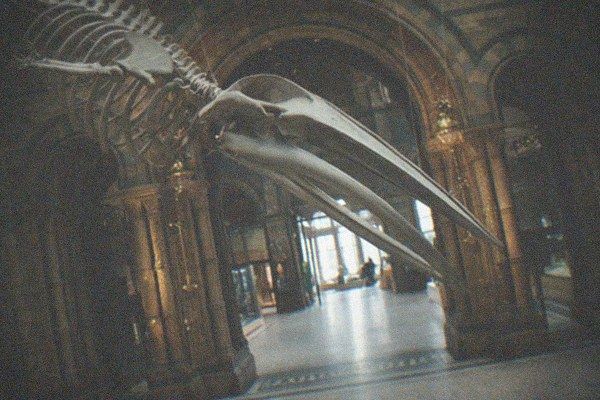
South Kensington, Cromwell Road · Hope the blue whale skeleton in Hintze Hall
Vast collection of natural specimens including dinosaurs, mammals, and minerals.
Free entry, no ticket needed.
Free entry, no ticket needed.
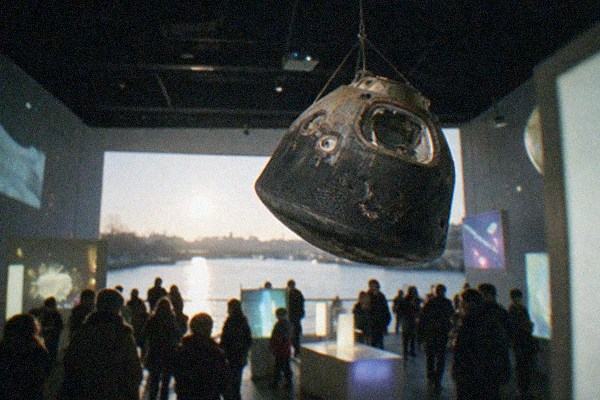
Apollo 10 command module
Plan your visit →Opens the museum's own visitor page. There is nothing to book: the permanent collection is free.
The Science Museum in South Kensington covers science, technology and innovation from steam engines to spaceflight, and its signature object is the Apollo 10 command module. It suits families, anyone with a passing interest in engineering, and visitors who want big interactive galleries. Entry costs nothing, though several add-on attractions inside do charge.
The Science Museum holds interactive exhibits on science, technology and innovation, running from the earliest steam engines through to spaceflight. Its single most famous object is the Apollo 10 command module, the real spacecraft that flew around the Moon in 1969 and is now displayed in the museum's space gallery.
The Apollo 10 capsule is the headline, and it earns that status honestly. This is not a replica or a test article: it is the actual command module that carried astronauts Tom Stafford, John Young and Gene Cernan on the dress rehearsal for the Moon landing in May 1969, coming within a few miles of the lunar surface. Standing in front of a scorched, flown spacecraft that has been to the Moon and back is a different experience from looking at any model, and the museum gives it proper space and context among other spaceflight artefacts.
Around the Apollo 10 module sits a wider space collection that traces the story of rocketry and human spaceflight, and beyond that the museum opens out into galleries covering several centuries of invention. The steam collection is a particular strength, with towering engines that once powered mills, mines and railways, some of them demonstrated in operation. If your mental image of a museum is glass cases and small labels, the engine halls will correct it: these are full-scale machines occupying whole floors, and the interpretation does a good job of explaining why they mattered to everyday life.
Medicine, telecommunications, computing and flight all get dedicated treatment too. There are early computers and calculating machines, aircraft suspended from the ceilings, and galleries on the history of medical practice that are among the most thoughtful in the building. The museum describes its approach as interactive rather than reverential, and that is accurate: many exhibits are designed to be pushed, wound, cranked or otherwise operated, which is why it has such a strong reputation with families. It is one of the few big London museums where touching things is the default rather than the exception.
Alongside the permanent galleries there are paid attractions such as Wonderlab, an interactive science gallery, Power Up, which is focused on video games, and an IMAX cinema. These are covered in the ticket section below, because they are the main thing that separates a free visit from a spendy one. The permanent collection alone is genuinely a full half-day out and does not require you to spend a penny.
Entry to the Science Museum is free to all, year round, and no general admission ticket is needed to walk in. The exceptions are Wonderlab, Power Up, the IMAX cinema and similar special attractions inside the building, which charge separately. Booking a free ticket in advance is recommended, and the ticket itself costs nothing.
The free-entry principle is the single most important thing to understand before you go, so it deserves plain language. General admission costs nothing. There is no hidden fee, no peak-season surcharge, no paid tier that unlocks the good stuff. The museum recommends booking a free advance ticket for general admission, and this is genuinely a recommendation rather than a marketing trick: timed entry keeps crowds manageable, and a reserved slot means you walk past any queue for people arriving without one.
What still costs money is the layer of paid experiences on top of the free galleries. Wonderlab is the big one, a hands-on science gallery with live demonstrations and dozens of interactive stations, aimed squarely at children. Power Up is the video game attraction. The IMAX shows films on a giant screen. These carry separate charges, and for the current price of each, check the current price on the museum's own site, because these figures change and this directory does not guess at them. Children aged 3 and under go free to the paid attractions.
One honest framing for families: a free visit is entirely possible and perfectly good, but if you plan to add Wonderlab and a film, your day starts to resemble a paid attraction in cost. Decide in advance what you actually want to do, and price it up on the official Science Museum site before you travel rather than at the ticket desk with children in tow.
| Item | Price | Notes |
|---|---|---|
| General admission | Free | All year round, no ticket needed to enter, timed entry required, advance free ticket recommended |
| Wonderlab | Check the current price on the museum's own site | Paid interactive science gallery, under-3s free |
| Power Up | Check the current price on the museum's own site | Paid video game attraction, under-3s free |
| IMAX cinema | Check the current price on the museum's own site | Separate charge, films shown on giant screen |
| Free advance general admission ticket | Free | Recommended, reserves your timed entry slot |
It is also worth saying what this museum is not doing. There is no pressure-selling here, no countdown timer, no suggestion that free tickets are running out. The recommendation to book ahead exists because of timed entry, not scarcity theatre. Book a slot a few days out, turn up near your time, and you are in.
The Science Museum is on Exhibition Road in South Kensington, at coordinates 51.4974, -0.17467. Allow roughly half a day for a solid visit, longer if you add Wonderlab or the IMAX. Entry is free, timed entry applies, and opening details should be confirmed on the museum's site before travel.
| Detail | Information |
|---|---|
| Location | South Kensington, Exhibition Road |
| Coordinates | 51.4974, -0.17467 |
| Entry cost | Free to all, year round |
| Timed entry | Required, free advance general admission ticket recommended |
| Paid attractions | Wonderlab, Power Up, IMAX and similar |
| Children under 3 | Free for paid attractions |
| Time to allow | Roughly half a day, more with paid attractions |
| Opening hours | On the museum's site |
| Closed days | On the museum's site |
| Nearest station | South Kensington (Underground) |
| Official site | sciencemuseum.org.uk |
South Kensington is the nearest Underground station, a short walk from the museum along a pedestrian tunnel that emerges practically at Exhibition Road, which is useful in bad weather. Opening hours and closed days change occasionally, so treat the museum's own site as the source of truth on the day you plan to visit rather than any directory, including this one.
Allow at least two to three hours for the free galleries, and closer to a full day if you add Wonderlab, Power Up or an IMAX film. Weekday mornings are the calmest period, while weekends and school holidays bring the heaviest family crowds, as you would expect from a museum this popular with children.
The honest answer to how long you need depends on your party. Adults visiting the permanent collection at a brisk pace can cover the highlights, including the Apollo 10 command module and the steam engines, in around two hours. Families with primary-age children rarely leave that quickly, because the interactive galleries are designed to absorb attention. If Wonderlab is on your plan, add its own block of time on top: it is not a five-minute wander but a stay-and-play space.
Timing matters more here than at quieter museums. The Science Museum is one of the most visited museums in the country and it sits in the middle of London's museum quarter, so it draws school groups in term time and family crowds in holidays. Arriving near opening time, or later in the afternoon after school groups have departed, tends to be the calmer experience. Saturday remains the busiest day of a normal week.
There is no seasonal price dimension to worry about, which simplifies planning. Free is free in August just as it is in February. The only reason to think about dates at all is crowd levels and the availability of timed entry slots, which can tighten during school holidays even though the tickets cost nothing. Book your slot a little further ahead in those weeks and the rest takes care of itself.
The Science Museum sits on Exhibition Road in South Kensington, closest to South Kensington Underground station. Entry is free but timed, so hold a booked slot. The museum is family-oriented, accessible, and part of a pedestrian-friendly cultural quarter that also includes the Natural History Museum next door.
Getting there is straightforward. South Kensington station, served by the Circle, District and Piccadilly lines, is the obvious choice, and the pedestrian tunnel from the station towards the museums spares you the worst of the traffic and rain. Exhibition Road itself is a pedestrian-prioritised street, which makes the approach with children or buggies far less stressful than central London usually is. If you are driving, this is not the museum for it: parking in South Kensington is difficult and expensive, and public transport is the sensible answer.
Accessibility provision is a priority for a museum of this scale and family focus, as you would expect from a national institution. For the current details on step-free access, lifts, accessible toilets, quiet openings and any bag or security rules in force, the museum's own site carries the authoritative and up-to-date information, and that is where to confirm specifics before you travel. Policies of this kind change more often than opening hours, so a directory should not print them as permanent facts.
Food and drink are available in the building, at the usual prices you find in London museums, which is to say not cheap. South Kensington itself has plenty of cafes and lunch spots within a few minutes' walk, and the location of the museum inside a cultural quarter means stepping out for food is easy. It is worth adding, since we cover tickets honestly elsewhere: the free entry does not obligate you to buy anything inside, and plenty of visitors bring nothing and spend nothing.
The Natural History Museum is a few minutes' walk away on the same street, making it the obvious pairing with the Science Museum. Also reachable is the Royal Observatory in Greenwich, further afield but thematically perfect for visitors whose interest was sparked by the Apollo 10 command module.
The South Kensington cluster is the strongest museum pairing in London. The Natural History Museum is effectively next door on Exhibition Road, and the Victoria and Albert Museum completes the trio a short stroll further. On any normal day you can cover one properly and dip into another, but doing all three in depth in one day is a mistake, since each deserves hours rather than minutes. Families often split the day: Science Museum in the morning when children are freshest, then across the road afterwards. Our Natural History Museum tickets and prices guide covers the same honest questions on that side of the street.
For a second-day itinerary, the space connection deserves attention. If the Apollo 10 module leaves you or your children wanting more astronomy, the Royal Observatory at Greenwich is the natural follow-on: the home of Greenwich Mean Time, the Prime Meridian line, and London's planetarium. It is a different part of the city, reached via Greenwich rather than South Kensington, so plan it as its own trip rather than an afterthought.
Otherwise, Kensington Gardens and Hyde Park sit north of the museum quarter if you want green space after hours of galleries, and the shops and restaurants of Kensington High Street are a reasonable walk west. The whole area rewards walking, and Exhibition Road in particular has been designed around people on foot rather than cars, which is rare in central London and worth taking advantage of.
Yes. Entry is free to all, year round, and no general admission ticket is needed to walk in. The exceptions are paid attractions inside, namely Wonderlab, Power Up, the IMAX cinema and similar, which charge separately. The museum recommends booking a free advance general admission ticket, though it is not compulsory.
A free advance general admission ticket is recommended rather than compulsory, because timed entry applies to the museum. Booking a slot means you arrive with a reserved place and can skip past people queuing without one. During school holidays the free slots tighten, so booking ahead makes more sense then.
The Apollo 10 command module is the museum's signature object. It is the real spacecraft that flew around the Moon in 1969 on the dress rehearsal for the lunar landing, and it is displayed in the space gallery alongside a wider collection covering rocketry and human spaceflight.
Allow at least two to three hours for the free galleries at a reasonable pace, and closer to half a day or more if you add paid attractions such as Wonderlab, Power Up or an IMAX film. Families with children usually take longer, as the interactive galleries are built to hold attention.
General admission costs nothing, but Wonderlab, Power Up, the IMAX cinema and similar attractions inside carry separate charges. For the current price of any of them, check the current price on the museum's own site, since this directory does not guess at figures that change.
General admission is free to everyone, so children pay nothing for the museum itself. For the paid attractions inside, such as Wonderlab and Power Up, children aged 3 and under go free.
It is on Exhibition Road in South Kensington, at coordinates 51.4974, -0.17467. South Kensington Underground station is the nearest stop, and a pedestrian tunnel from the station leads out towards the museum, which is handy in bad weather. Exhibition Road itself prioritises people on foot.
Yes, it is a few minutes' walk away on the same street, Exhibition Road. The two museums are the most obvious pairing in London, and many families split a day between them. If space exhibits spark an interest, the Royal Observatory in Greenwich makes a good follow-on trip on another day.
South Kensington, Cromwell Road · Hope the blue whale skeleton in Hintze Hall
Vast collection of natural specimens including dinosaurs, mammals, and minerals.
Free entry, no ticket needed.
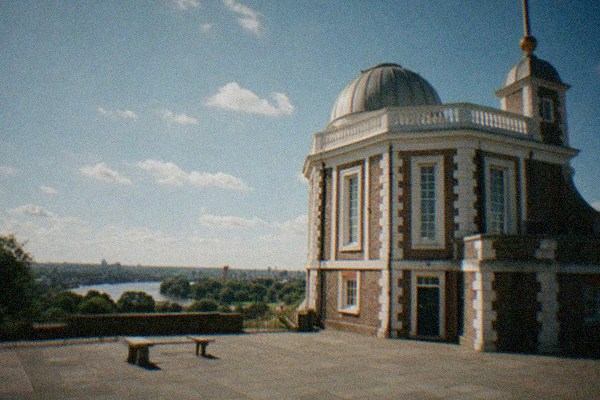
Greenwich · Astronomy and navigation history in Greenwich Park.
Home of Greenwich Mean Time and Prime Meridian with planetarium.
from $32.54per person, live price on the listing Check availability →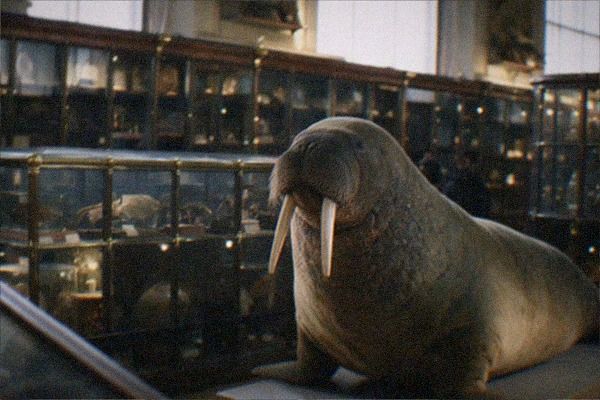
Forest Hill, London Road · Aquarium and gardens
Natural history, anthropology, and music collections with gardens.
Free entry, no ticket needed.